

Article: Herbal Tea for Digestion: 7 Best Herbs and What Each Does

Herbal Tea for Digestion: 7 Best Herbs and What Each Does
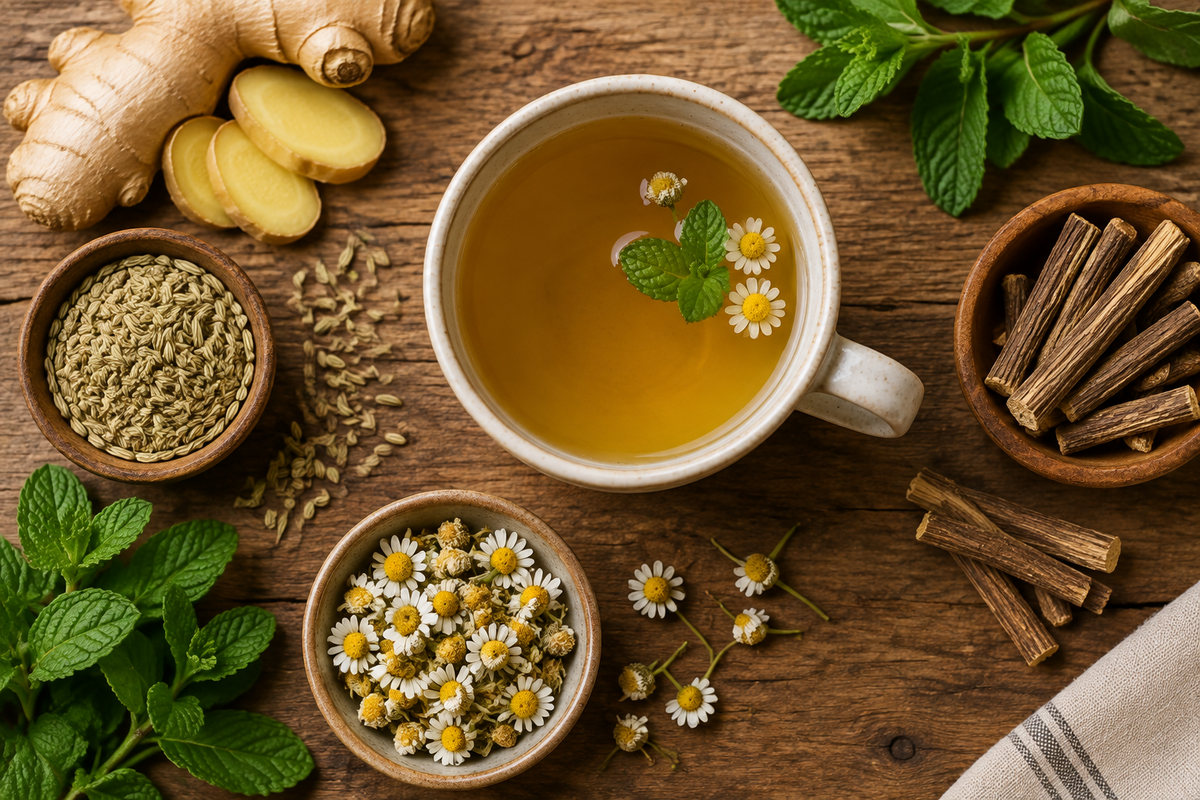
Looking for a herbal tea for digestion? Start with the herb, not the promise. Peppermint is best suited to a tight, gassy stomach. Ginger makes more sense when your stomach feels heavy or queasy. Fennel has a long tradition of use for gas. Chamomile offers a gentler approach when stress seems tied to your stomach. And then there are herbs such as rooibos that play a different role entirely: less about fixing a digestive symptom and more about creating a smooth, caffeine-free cup you can actually enjoy after dinner. That distinction matters. A lot of teas are marketed simply as “digestive tea,” as though one blend should somehow do everything. Digestion is more complicated than that.
Here are seven of the most useful herbs to know, what makes each one different, and where the evidence is strong, promising, or mostly traditional.
The Best Herbal Teas for Digestion at a Glance
|
Herbal tea |
Best fit |
What makes it useful |
|
Peppermint |
Gas, bloating and cramps |
Menthol relaxes smooth muscle in the digestive tract |
|
Ginger |
Nausea, heaviness and a slow-feeling stomach |
Research shows ginger can speed stomach emptying |
|
Fennel |
Gas and a windy stomach |
Traditionally used as a carminative |
|
Chamomile |
A tense or stress-linked stomach |
Gentle, caffeine-free, and traditionally soothing |
|
Rooibos |
An easy after-dinner digestive tea base |
Naturally caffeine-free and smooth |
|
Calendula |
Supporting botanicals in herbal blends |
Traditionally used as a soothing herb |
|
Licorice root |
Traditional digestive use |
Needs more caution than its soothing reputation suggests |
There isn't one winner for every stomach. The better question is: what is your stomach actually doing?
1. Peppermint Tea: Best for a Gassy, Crampy Stomach
Peppermint is probably the herb most closely associated with digestive tea, and for good reason. Its characteristic cooling compound, menthol, has an antispasmodic effect. In plain language, it helps smooth muscle relax. That matters because your digestive tract is lined with smooth muscle. When it tightens or spasms, gas can become trapped, resulting in pressure, cramping, and a swollen stomach.
Peppermint has also been studied extensively in people with irritable bowel syndrome, where abdominal pain and bloating are common symptoms. Tea contains the same plant compounds at a much gentler dose, so it makes sense as an everyday herbal drink, but it should not be treated as equivalent to a clinical peppermint-oil preparation.
If bloating is the main reason you are searching for a digestive tea, we go much deeper in our Best Tea for Bloating guide and our guide to Peppermint Tea for Bloating, Gas, and Stomach Cramps.
One exception: Peppermint may worsen acid reflux in some people because its muscle-relaxing action can affect the valve between the stomach and the esophagus. If heartburn is your issue, peppermint may be the wrong cup.
2. Ginger Tea: Best for Nausea and a Heavy Stomach
Peppermint relaxes. Ginger moves. That is an easy way to remember the difference. Ginger contains naturally occurring compounds, including gingerol and shogaol, and human research has found that ginger can speed gastric emptying, the process of moving food from your stomach onward.
In one study, ginger significantly accelerated stomach emptying in healthy adults. That helps explain why ginger is such a natural fit when a meal seems to be sitting heavily rather than when the problem is trapped gas. Ginger also has one of the better research records among digestive herbs for nausea, particularly pregnancy-associated nausea.
So think: Heavy. Slow. Queasy. → Ginger.
For the full evidence and how to use it, read our guide to Ginger Tea for Digestion and Nausea.
3. Fennel Tea: The Traditional Pick for Gas
Fennel has been used after meals across several food and herbal traditions for a reason. The seeds are considered carminative, a wonderfully old-fashioned word for herbs traditionally used to help gas move through the digestive tract. If peppermint is the famous digestive herb, fennel is its quieter cousin.
It has a naturally sweet, anise-like flavor that people tend to either love immediately or recognize as very definitely licorice adjacent. But its traditional use for a gassy, windy stomach makes it one of the herbal teas for digestion worth knowing.
4. Chamomile Tea: When Your Stomach and Your Day Are Both Tense
Sometimes your stomach seems to have read your calendar. Stress and digestion are closely connected through the gut-brain axis, which is why a tense day can sometimes come with an equally tense stomach. Chamomile has a long history of traditional use for both relaxation and digestive comfort. It is gentle, floral, and naturally caffeine-free, which makes it particularly easy to reach for in the evening. Its strength is its gentleness. If your stomach feels unsettled at the same time you feel unsettled, a warm cup of chamomile can make sense as part of the wind-down.
In the Avodah range, chamomile is part of Sleep Restore, where its main role belongs to our sleep and relaxation collection rather than our digestion line.
5. Rooibos: A Really Useful Base
Rooibos deserves a slightly different introduction because it is often given health claims it hasn't earned. Rooibos comes from the South African plant Aspalathus linearis. Technically, it is a tisane, or herbal infusion, rather than a true tea from Camellia sinensis.
It contains naturally occurring polyphenols and is naturally caffeine-free. What we would not tell you is that rooibos has been proven to cure digestive inflammation or treat stomach conditions. Human research does not justify that leap. Its value in a digestive blend is much more practical. It is smooth. It is naturally caffeine-free. It works beautifully with stronger botanicals. And you can drink it after dinner without adding the caffeine found naturally in black, green, or matcha tea. That makes rooibos an excellent foundation for an everyday herbal tea for digestive health, particularly when paired with an herb that has a clearer digestive purpose. Which is exactly why we use it with peppermint in Belly Balance.
6. Calendula: A Supporting Herb, Not the Headline
Calendula's orange-gold petals have been used traditionally in herbal preparations for generations. It is also a good example of why we separate traditional use from strong clinical evidence. Calendula contains several interesting botanical compounds and has a history of soothing use, but human research specifically showing that calendula tea improves digestion is limited. So it does not need an exaggerated claim to earn a place in a blend. Sometimes an herb is there to complement the cup. In Belly Balance, calendula sits alongside peppermint and rooibos rather than trying to do the peppermint's job.
7. Licorice Root Tea: Useful to Know, but Not for Everyone
Licorice root is commonly used in traditional digestive preparations and has a long history of use for stomach complaints. It also needs more caution than many “best herbal tea” lists give it. Regular licorice root contains glycyrrhizin, a compound that can affect blood pressure and potassium levels when consumed in significant amounts. It can also interact with certain medications and is not appropriate for everyone.
A processed form called deglycyrrhizinated licorice, or DGL, removes most of that compound and is different from simply drinking licorice-root tea. So licorice deserves a place in a useful guide to digestive herbs, but not the casual “drink this every day for reflux” recommendation it is sometimes given online.
If acid reflux is what brought you here, use our dedicated Tea for Acid Reflux: What Helps and What to Avoid guide instead.
Herbal Tea or True Tea: What's the Difference?
Here is one useful bit of tea language. Peppermint, ginger, chamomile, fennel, and rooibos are technically not “true teas.”
True tea comes from the plant Camellia sinensis:
- Black tea
- Green tea
- White tea
- Oolong tea
- Matcha
Botanical drinks made from herbs, roots, flowers, fruit, and spices are technically tisanes or herbal infusions. But almost nobody walks into the kitchen and announces that they are brewing a post-dinner tisane. So, herbal tea it is. The distinction does matter when it comes to caffeine. Most pure herbal teas are naturally caffeine-free, while black and green teas naturally contain caffeine. Always check the full ingredient list of a blend rather than assuming that a tea marketed for digestion is caffeine-free.
How to Choose the Right Herbal Tea for Your Digestion
Rather than collecting seven boxes and hoping your stomach provides instructions, start with the feeling.
Tight, bloated, gassy, or crampy? Start with peppermint.
Heavy, slow, or queasy? Ginger makes more sense.
Windy or gassy, and you enjoy anise flavors? Try fennel.
Stomach unsettled alongside stress? Chamomile is the gentler choice.
Want a caffeine-free after-dinner cup? Look for a rooibos or herbal base, then check which active herbs are blended with it.
Heartburn or acid reflux? Do not automatically reach for peppermint. Our dedicated reflux guide explains why.
That last point is important: “good for digestion” does not automatically mean good for every digestive problem."
Where Belly Balance Fits
Belly Balance was created around one of the clearest herbal pairings in this list.
Peppermint leaves + rooibos:
Peppermint serves a digestive purpose. Rooibos gives it a smooth, naturally caffeine-free base.
The full blend is:
- Rooibos
- Peppermint leaves
- Calendula petals
- Cacao bean pieces
- Stevia leaves
The flavor lands somewhere between refreshing mint and soft cocoa, with enough natural sweetness to make the cup feel like something you actually chose because you wanted it, not something you are forcing down because it is supposedly “good for you.” And because there is no caffeine, it fits just as naturally after dinner as it does in the middle of the afternoon.
Belly Balance — a moment made for feeling at ease.
A thoughtfully built herbal cup for the moments when your stomach feels a little too full from the day.
[Explore Belly Balance Tea]
A Quick Note About “Detox” Teas
Avodah's Pure Detox is a ginger-and-turmeric blend on a black-and-green tea base intended for a heavy or sluggish daytime stomach.
A warm mug gives you fluid, warmth, and a reason to stop moving for a few minutes. But it can turn something useful into something you look forward to.
After dinner. Laptop closed. Phone somewhere other than your hand. A warm cup while everything, including you, gets a chance to settle. That is the part we think of as an Avodah Moment: a small act of care woven into a day already carrying plenty. If you want to build that routine more intentionally, our After-Meal Tea Ritual walks you through it.
The Bottom Line
The best herbal tea for digestion depends on what you need from the herb.
Peppermint is the standout for gassy, crampy digestive discomfort, although the strongest research is on concentrated peppermint oil rather than tea.
Ginger is the stronger choice for nausea and a stomach that feels heavy or slow.
Fennel has a long traditional history for gas.
Chamomile makes sense when you want something gentle and calming, and
Rooibos offers something less dramatic but extremely useful: a smooth, naturally caffeine-free foundation for a digestive herbal blend.
You do not need one tea that claims to do everything. You need the right herb for the right moment. And sometimes you simply need five warm minutes to let your stomach, and the rest of you, settle.
Frequently Asked Questions
What is the best herbal tea for digestion?
There is no single best herbal tea for every digestive problem. Peppermint is best suited to gas, bloating, and cramping; ginger to nausea and a heavy or slow-feeling stomach; fennel is traditionally used for gas; and chamomile is a gentle option when digestive discomfort accompanies stress.
What herbal teas are good for digestion?
Peppermint, ginger, fennel, and chamomile are among the most commonly used herbal teas for digestion. They work differently, so choose according to how you are feeling rather than treating all digestive teas as interchangeable.
Does herbal tea actually help digestion?
Some herbs have meaningful research behind specific digestive effects. Ginger has human evidence for nausea and stomach emptying, while peppermint has substantial research for digestive pain and bloating, although much of that research uses peppermint oil capsules rather than tea. Evidence for other herbal teas ranges from emerging to primarily traditional.
Is peppermint or ginger tea better for digestion?
Neither is universally better. Peppermint makes more sense for a gassy, crampy, or bloated stomach because menthol relaxes smooth muscle. Ginger makes more sense for nausea, heaviness, or a slow-feeling stomach because it can speed gastric emptying.
Are herbal digestive teas caffeine-free?
Most pure herbal teas, such as peppermint, chamomile, rooibos, and ginger, are naturally caffeine-free. However, blends may also contain black tea, green tea, matcha, or other caffeinated ingredients, so always check the ingredient list.
Can I drink herbal tea for digestion every day?
For most healthy adults, common caffeine-free herbal teas can fit into a regular routine. The specific herb still matters, though. Senna-containing laxative teas are not intended as everyday digestive teas, and some herbs may interact with medications or medical conditions.
What herbal tea should I avoid if I have acid reflux?
Peppermint can worsen reflux or heartburn in some people because menthol may relax the lower esophageal sphincter. Caffeinated teas can also aggravate reflux for some people. If reflux is your primary concern, read our dedicated acid-reflux tea guide rather than choosing a general digestive blend.
Is rooibos tea good for digestion?
Rooibos is naturally caffeine-free and makes a smooth, gentle base for digestive herbal blends. It contains plant polyphenols, but current human evidence is not strong enough to claim that rooibos itself treats digestive problems.
References
Peppermint
Khanna R, MacDonald JK, Levesque BG. Peppermint oil for the treatment of irritable bowel syndrome: a systematic review and meta-analysis. Journal of Clinical Gastroenterology.
Ford AC et al. Effect of fibre, antispasmodics, and peppermint oil in the treatment of irritable bowel syndrome: systematic review and meta-analysis. BMJ.
Ginger
Wu KL et al. Effects of ginger on gastric emptying and motility in healthy humans. European Journal of Gastroenterology & Hepatology. 2008.
Viljoen E et al. A systematic review and meta-analysis of the effect and safety of ginger in the treatment of pregnancy-associated nausea and vomiting. Nutrition Journal. 2014.
Detox teas
Klein AV, Kiat H. Detox diets for toxin elimination and weight management: a critical review of the evidence. Journal of Human Nutrition and Dietetics. 2015.


Leave a comment
This site is protected by hCaptcha and the hCaptcha Privacy Policy and Terms of Service apply.