

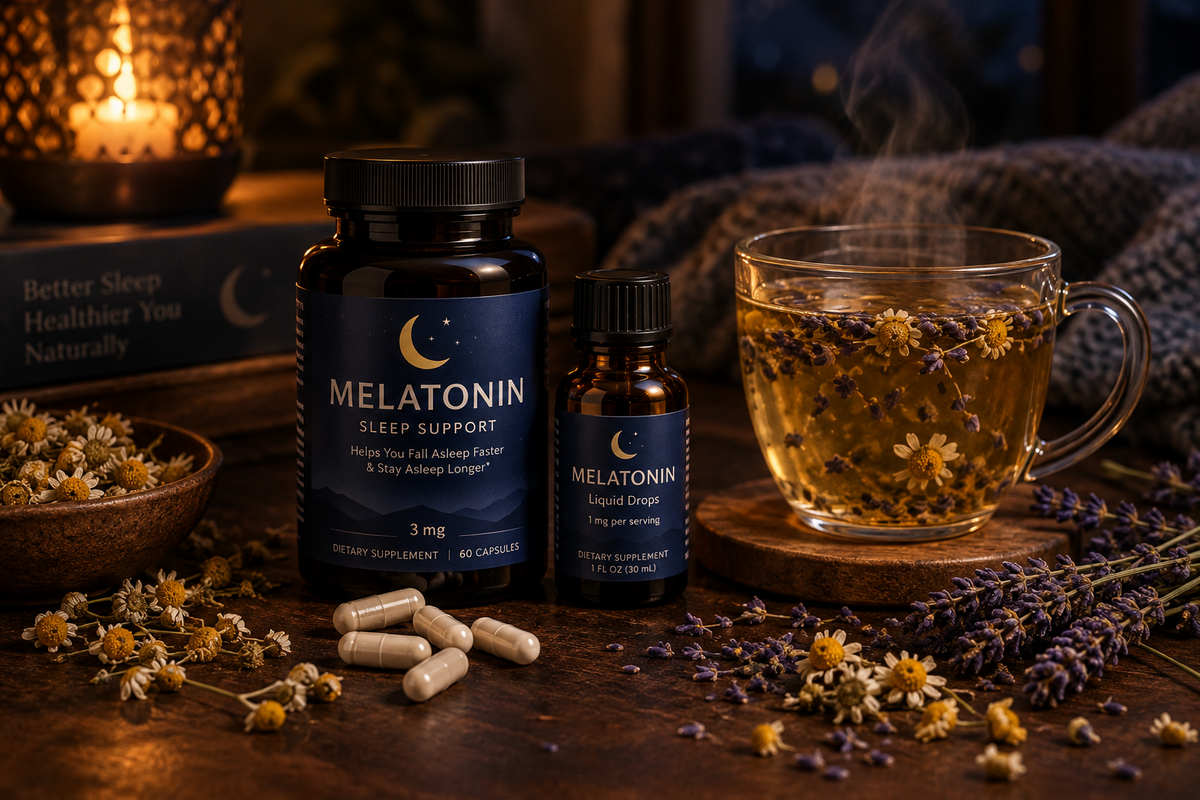
Melatonin vs Herbal Tea for Sleep
Melatonin and herbal tea can both have a place in a bedtime routine, but they work very differently. Melatonin is a hormone your body naturally produces as darkness approaches. As a supplement, it is mainly used to help influence your body’s sleep-wake timing, which is why it may be useful when your internal clock and your desired bedtime do not line up.
Herbal sleep tea takes a different approach. A caffeine-free cup does not reset your body clock in the same way melatonin can. Instead, it can become part of a calming wind-down routine: something warm to sip, a reason to slow down, and a repeated cue that the active part of your day is coming to an end.
So when comparing melatonin vs herbal tea for sleep, the useful question is not simply, “Which one is stronger?” It is: What is keeping you awake in the first place? If your problem is primarily sleep timing, melatonin may have a role. If you are looking for a gentle nightly ritual to help you transition from a busy day, a caffeine-free herbal tea may make more sense.
What melatonin does
Melatonin is sometimes described as a sleeping pill, but that is not quite accurate. Your brain naturally releases melatonin in response to darkness as part of the circadian system that helps regulate when you feel awake and when your body prepares for sleep. Taking melatonin as a supplement can influence that timing signal.
That distinction matters.
Melatonin may be particularly relevant when your internal clock is out of sync with the schedule you need to follow. Jet lag is an obvious example. Traveling across time zones can leave your body operating according to one clock while the local time says something completely different. Melatonin is also sometimes used to delay sleep timing when someone consistently becomes sleepy much later than they would like.
It is less useful to think of melatonin as something that simply “knocks you out.” Research suggests that melatonin may help with certain sleep-related outcomes, but the effects vary depending on the sleep problem, timing, dose, and individual. Evidence for treating chronic insomnia is mixed, which is one reason taking more melatonin is not necessarily better. Timing matters as well. Because melatonin affects your body clock, taking it at the wrong time may not produce the result you expect.
Possible side effects can include daytime drowsiness, headache, dizziness, or nausea. If you are considering taking melatonin regularly, particularly if you use medications or have an ongoing sleep problem, it is worth discussing the timing and dose with a healthcare professional.
What herbal tea does
Herbal sleep tea does not work like melatonin. A caffeine-free herbal infusion does not provide your body with the hormone that regulates circadian timing. Instead, its value is often found in the combination of the herbs themselves and the bedtime routine built around drinking them.
Chamomile is one of the most familiar herbs used in evening teas. Valerian is another traditional sleep ingredient and is frequently combined with other herbs rather than used alone because of its distinctive earthy taste. Both have long histories of traditional use for relaxation and sleep, although research on their effectiveness for insomnia remains limited and inconsistent.
That does not make the ritual meaningless. Think about what happens when you make a cup of tea at night. You stop what you are doing. You boil the water. You put the phone down for a moment. You wait while the tea steeps. You sit and drink something warm rather than continuing to work, scroll, or rush through another task. Repeated night after night, those actions can become part of a recognizable wind-down routine.
This is where herbal tea for sleep differs most clearly from melatonin. Melatonin primarily relates to biological sleep timing. Herbal tea can serve as a sensory and behavioral cue that signals the demanding part of the day is ending. And if you are choosing tea specifically for bedtime, make sure it is genuinely caffeine-free. Black, green, and white teas naturally contain caffeine, while herbal infusions such as chamomile are naturally caffeine-free.
Which should you choose?
Start with the reason you are having difficulty sleeping.
Melatonin may make more sense when sleep timing is the problem.
That could include jet lag, an unusually late sleep schedule, or another situation where your internal clock is misaligned with when you need to sleep. Because timing and dosage matter, melatonin is best approached deliberately rather than simply taking a large dose at bedtime.
Herbal tea may make more sense when you want help creating a wind-down routine.
If your evenings stay busy right up until your head hits the pillow, a caffeine-free tea gives you a natural transition. Brewing and drinking it can become the moment when you dim the lights, put the screens away, and shift into a slower part of the evening.
There is also no reason the comparison has to be strictly either/or. Someone may use melatonin occasionally when traveling while still keeping a caffeine-free tea as part of their normal evening routine. They are addressing two different things. For an everyday bedtime habit, tea also has one practical advantage: the ritual itself is easy to repeat. A warm cup can become an enjoyable signal that your day is winding down rather than another task you have to remember.
Our Sleep Restore combines chamomile and valerian with caffeine-free herbal ingredients for exactly that kind of evening moment. If you want to understand the different herbs and teas commonly used before bed, explore our complete guide to tea for sleep.
Melatonin vs herbal tea at a glance
|
Melatonin |
Herbal Sleep Tea |
|
|
What it is |
A hormone is also available as a supplement |
A caffeine-free herbal infusion |
|
Main role |
Influences sleep-wake timing |
Supports a calming bedtime routine |
|
Useful when |
Your sleep schedule or body clock is misaligned |
You want a consistent way to slow down before bed |
|
Best known for |
Jet lag and circadian timing |
Warmth, ritual, and traditional calming herbs |
|
Nightly ritual |
Not necessarily |
Yes |
|
Contains caffeine |
No |
Not if made entirely from caffeine-free herbs |
|
Important consideration |
Dose and timing matter |
Ingredients and possible herb-medication interactions matter |
The takeaway is simple: melatonin and herbal tea are not competing versions of the same sleep aid. One works primarily with sleep timing. The other can help create the environment and routine around sleep.
Understanding that difference makes it much easier to decide which one belongs in your evening.
Frequently asked questions
Is herbal tea better than melatonin?
Neither is automatically better. They serve different purposes. Melatonin influences your body's sleep-wake timing and may be helpful for issues such as jet lag or delayed sleep timing. A caffeine-free herbal tea is better suited to creating a relaxing, repeatable bedtime routine.
Can I take melatonin and drink sleep tea?
Some people use both because they work differently, but it depends on what is in the tea. Certain herbs can interact with medications or other substances. If you take melatonin, prescription medication or other sleep products regularly, check with your healthcare provider before combining them.
Does chamomile tea work like melatonin?
No. Chamomile and melatonin are completely different. Melatonin is a hormone involved in regulating your circadian rhythm. Chamomile is an herb traditionally used in calming teas. Research has not established chamomile as equivalent to melatonin or as a treatment for insomnia.
Which is better for a busy mind at night?
If your main challenge is switching off from a busy day rather than changing your sleep timing, developing a consistent wind-down routine may be more relevant. A caffeine-free herbal tea can become one part of that routine alongside lower lighting, fewer screens, and quieter activities before bed.
Can you use melatonin every night?
Melatonin appears relatively safe for short-term use for many adults, but its long-term safety is less certain. If you find yourself needing melatonin every night or you regularly struggle to fall or stay asleep, speak with a healthcare professional about the underlying reason rather than simply increasing the dose.
Is herbal sleep tea caffeine-free?
Many are, but not every tea marketed for nighttime use is automatically caffeine-free. Check the ingredient list. Chamomile and other herbal infusions are naturally caffeine-free, while green tea, black tea, white tea and other teas made from the tea plant naturally contain caffeine unless they have been decaffeinated.



Leave a comment
This site is protected by hCaptcha and the hCaptcha Privacy Policy and Terms of Service apply.