

Article: Why Can't I Stay Asleep?
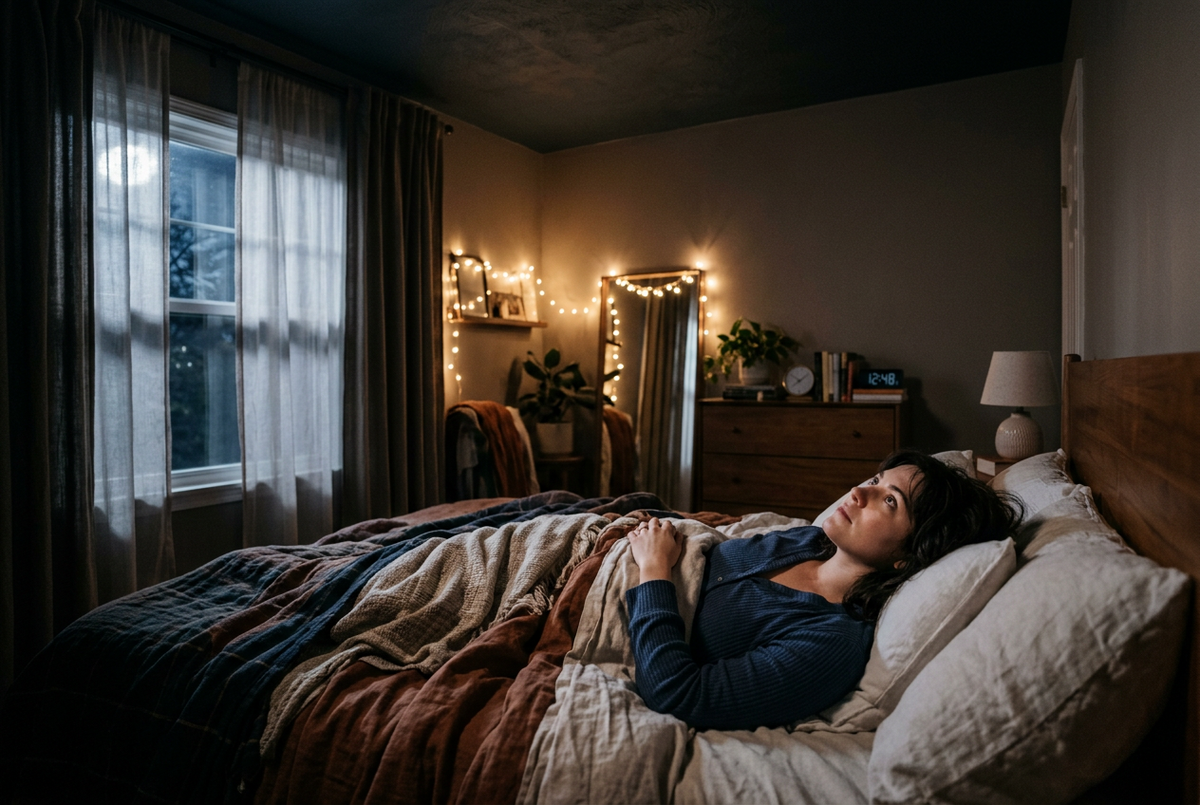
Why Can't I Stay Asleep?
If you fall asleep fine but keep waking in the night, the usual culprits are evening alcohol, late caffeine, stress and a racing mind, a bedroom that is too warm or too light, and late-night fluids. The good news: almost every one of them is fixable, and two herbs, chamomile and valerian, are linked in research to staying asleep and waking less during the night.* [1] [2]
Waking briefly between sleep cycles is completely normal. Everyone does it, several times a night, usually without remembering. The problem is when you surface fully and cannot drop back off. Here is why it happens and what helps.
The Common Reasons You Wake Up
Alcohol
The sneakiest sleep thief. Alcohol helps you fall asleep, then disrupts the second half of the night as your body processes it, bringing lighter sleep and more awakenings. [3] It is why you often wake at 2 or 3 am after an evening drink.
Late Caffeine
Caffeine lingers for hours. In a sleep study, caffeine taken six hours before bed still cut more than an hour from total sleep. [4] That afternoon coffee can still be disrupting your night at 2 am.
A Busy, Anxious Mind
Stress keeps your nervous system on alert, so you surface more easily between cycles and then lie there thinking. Stress is one of the strongest triggers of disrupted sleep. [5]
A Warm or Bright Room
Your body needs to stay cool and dark to hold deep sleep. Heat and light push you toward lighter, wake-prone sleep. [6]
Late Fluids
Large drinks late in the evening are a common cause of 3 am waking. Finish your last drink 30 to 60 minutes before bed.
Age
Sleep naturally becomes lighter with age, with less deep sleep and more brief awakenings. [7] Some night waking is normal and nothing to worry about.
Why Do I Keep Waking Up at 3 am?
Around 3 am, deep sleep gives way to lighter stages, so you surface more easily. At the same time, alcohol is wearing off, stress hormones naturally begin rising toward morning, and a full bladder or warm room can tip you awake. Fix the triggers above and the 3 am wake-ups usually fade.
What Actually Helps You Stay Asleep
- Stop alcohol a few hours before bed, or skip it on nights you want deep sleep.
- Cut caffeine by early afternoon. Swap your afternoon coffee for a caffeine-free herbal tea.
- Keep the room cool (around 18°C / 65°F) and dark. Blackout curtains, and cover glowing LEDs.
- Finish fluids earlier, and have your bedtime tea 45 minutes before bed, not in bed.
- Wind down to lower stress: dim lights, phone away, slow breathing. See our evening wind down routine.
- Drink a sleep tea built for staying asleep.
The Tea That Helps You Stay Asleep
Chamomile and valerian root are the two herbs most linked to sleeping through the night.*
- Chamomile: a 2024 meta analysis of 10 clinical trials found chamomile improved sleep, with the clearest benefit for staying asleep and waking less during the night.* [1] Its apigenin binds to the brain's calming GABA-A receptors.* [8]
- Valerian root: its valerenic acid amplifies GABA, the brain's main calming signal.* [9] Valerian improved sleep quality in clinical research, [2] and in a sleep lab study, two weeks of valerian increased deep, slow-wave sleep, the restorative stage that keeps you asleep.* [10]
Together they are the heart of Sleep Restore Tea: valerian root and chamomile, with peppermint and spearmint to settle the stomach, lemongrass, hibiscus, rosehip and blue cornflower. It is 100% caffeine-free and made for nightly use, with benefits that build over two to four weeks.* [11] Want deeper sleep too? Read How to Get More Deep Sleep.
The Avodah Moment: Before the 3 am Wake-Up
Avodah means devotion and service. The 3 am mind is often a devoted one, replaying the day, worrying about the people you love, planning tomorrow before it arrives.
Give that mind somewhere to rest before you sleep. Brew your Sleep Restore and cover it. While it steeps, write down whatever is still circling: the task, the worry, the thing you must not forget. Close the notebook. Then sit, sip slowly and breathe: in for four, out for six. You have done enough today.
You cannot pour from an empty cup. This is where you fill yours.
When to See a Doctor
If you snore loudly, wake gasping, or feel unrefreshed despite enough hours in bed, see your doctor, as these can point to sleep apnea.
Frequently Asked Questions
Why do I keep waking up at 3 am?
Common causes are alcohol wearing off, stress, a warm room or a full bladder. The early hours are also when deep sleep gives way to lighter stages, so you surface more easily.
How do I stop waking up in the night?
Cut evening alcohol and late caffeine, keep the room cool and dark, finish fluids earlier, wind down to lower stress, and drink a valerian and chamomile tea 45 minutes before bed.*
Is it normal to wake up during the night?
Yes. Brief wakings between sleep cycles are completely normal. The issue is only when you struggle to fall back asleep.
Which tea helps you stay asleep?
Chamomile and valerian root. A 2024 meta analysis found chamomile especially improved staying asleep, and valerian increased deep sleep in a sleep lab study.*
Does alcohol make you wake up at night?
Yes. Alcohol helps you fall asleep but disrupts the second half of the night, causing lighter sleep and more awakenings.
What should I do when I wake up and can't get back to sleep?
Keep the lights low, avoid your phone, and breathe slowly with long exhales. If you are still awake after 20 minutes, get up and do something quiet until you feel sleepy.
References
1. Kazemi A, Shojaei-Zarghani S, Eskandarzadeh P, Hashempur MH. Effects of chamomile (Matricaria chamomilla L.) on sleep: a systematic review and meta-analysis of clinical trials. Complement Ther Med. 2024;84:103071. https://www.sciencedirect.com/science/article/pii/S0965229924000591
2. Leathwood PD, Chauffard F, Heck E, Munoz-Box R. Aqueous extract of valerian root (Valeriana officinalis L.) improves sleep quality in man. Pharmacol Biochem Behav. 1982;17(1):65-71. https://pubmed.ncbi.nlm.nih.gov/7122669/
3. Ebrahim IO, Shapiro CM, Williams AJ, Fenwick PB. Alcohol and sleep I: effects on normal sleep. Alcohol Clin Exp Res. 2013;37(4):539-549.
4. Drake C, Roehrs T, Shambroom J, Roth T. Caffeine effects on sleep taken 0, 3, or 6 hours before going to bed. J Clin Sleep Med. 2013;9(11):1195-1200.
5. Kalmbach DA, Anderson JR, Drake CL. The impact of stress on sleep: pathogenic sleep reactivity as a vulnerability to insomnia and circadian disorders. J Sleep Res. 2018;27(6):e12710.
6. Okamoto-Mizuno K, Mizuno K. Effects of thermal environment on sleep and circadian rhythm. J Physiol Anthropol. 2012;31:14.
7. Ohayon MM, Carskadon MA, Guilleminault C, Vitiello MV. Meta-analysis of quantitative sleep parameters from childhood to old age in healthy individuals. Sleep. 2004;27(7):1255-1273.
8. Viola H, Wasowski C, Levi de Stein M, et al. Apigenin, a component of Matricaria recutita flowers, is a central benzodiazepine receptors-ligand with anxiolytic effects. Planta Med. 1995;61(3):213-216.
9. Benke D, Barberis A, Kopp S, et al. GABA A receptors as in vivo substrate for the anxiolytic action of valerenic acid, a major constituent of valerian root extracts. Neuropharmacology. 2009;56(1):174-181. https://pubmed.ncbi.nlm.nih.gov/18602406/
10. Donath F, Quispe S, Diefenbach K, Maurer A, Fietze I, Roots I. Critical evaluation of the effect of valerian extract on sleep structure and sleep quality. Pharmacopsychiatry. 2000;33(2):47-53.
11. Bent S, Padula A, Moore D, Patterson M, Mehling W. Valerian for sleep: a systematic review and meta-analysis. Am J Med. 2006;119(12):1005-1012.


Leave a comment
This site is protected by hCaptcha and the hCaptcha Privacy Policy and Terms of Service apply.