Globe Amaranth
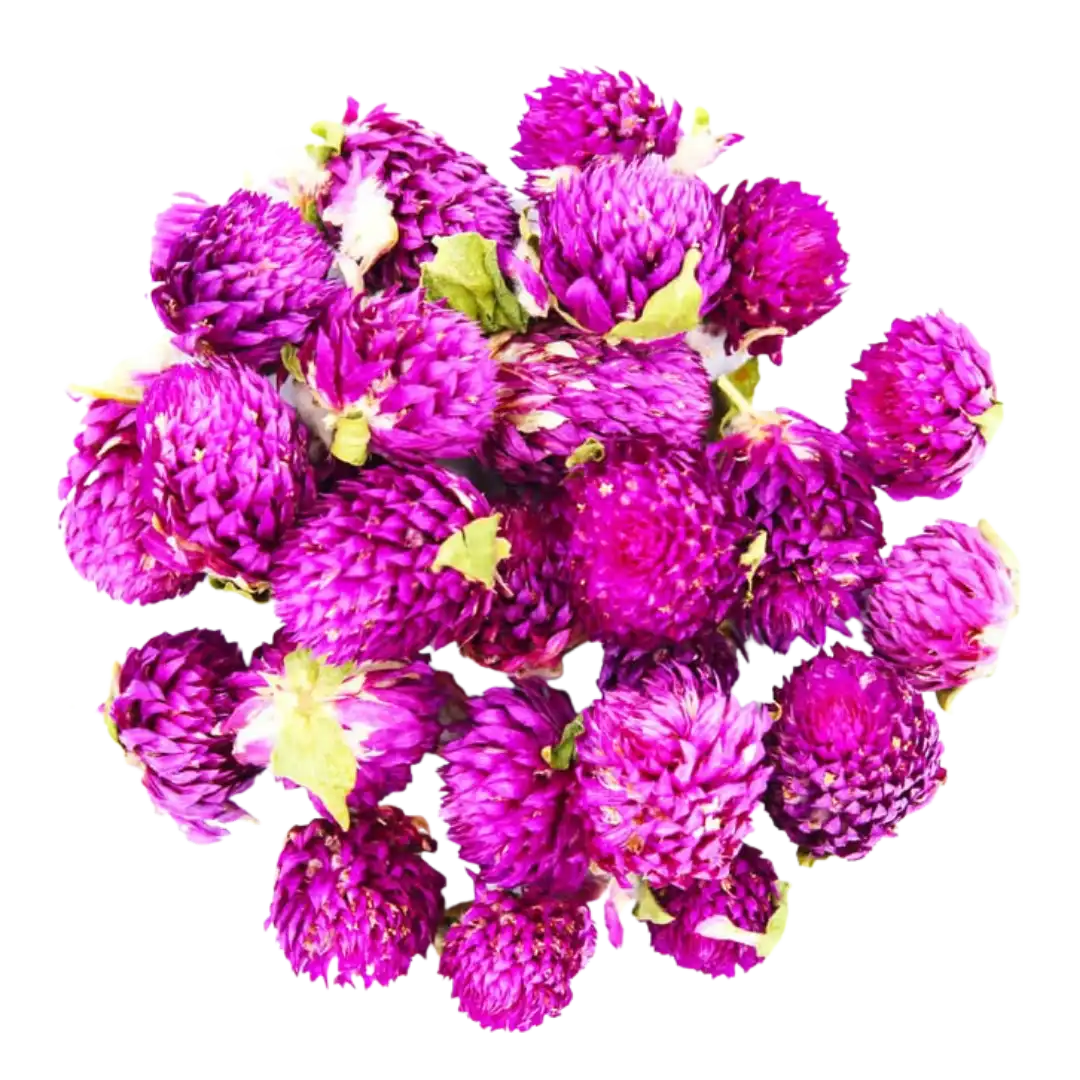
Globe amaranth (Gomphrena globosa) is a flowering plant in the amaranth family whose papery, globe-shaped flower heads are dried for herbal infusions. Its magenta colour comes from betacyanins, red-violet plant pigments, and its most abundant phenolic compound is the flavonoid kaempferol 3-O-rutinoside. It is traditionally used in India, Bangladesh, and Latin America for high blood pressure, jaundice, and urinary complaints. Published research so far is laboratory-based, focused on its antioxidant, antimicrobial, and enzyme-inhibiting activity.
update here to the tea ingredients its supposed for Globe Amaranth
Benefits of Globe Amaranth
Rich in antioxidant flavonoids

A natural source of betacyanin pigments

Studied for antioxidant activity

Studied for antimicrobial activity

Studied for slowing carbohydrate-digesting enzymes

Traditionally used for blood pressure, jaundice, and urinary complaints
Globe Amaranth
No published data exist on the vitamin or mineral content of a globe amaranth infusion. An analysis of plants consumed as infusions found globe amaranth richest in organic acids of the three tested.
Bioactive Components
Betacyanins: Red-violet pigments responsible for the flower's magenta colour; found in globe amaranth and not in the other plants it was compared with.
Kaempferol 3-O-rutinoside: The most abundant phenolic compound in the flower, a flavonoid glycoside.
Organic Acids: Present in higher concentration than in the other infusion plants tested.
Flavonoids and phenolic acids: Including flavonols and flavanols, measured as the flower's main antioxidant compounds.
Why Drink Globe Amaranth in Your Tea Blends?
Globe amaranth brings colour and antioxidant compounds to a blend. The research is early and lab-based, so here's exactly what it shows:
Rich in Antioxidant Compounds: Its flowers are rich in phenolic compounds, led by kaempferol 3-O-rutinoside, plus betacyanin pigments.
Studied for Antioxidant Activity: Extracts of its phenolic compounds showed clear antioxidant activity across six lab assays.
Studied for Antimicrobial Activity: In the lab, the same extracts were active against bacteria including E. coli and Listeria.
Studied for Slowing Carbohydrate Digestion: Lab tests found its phenolic compounds inhibited alpha-amylase, alpha-glucosidase, and lipase, enzymes that break down starch, sugar, and fat.
A Traditional Herbal Remedy: Traditionally used in India, Bangladesh, and Latin America for high blood pressure, jaundice, and urinary complaints.
We found no published human trials on globe amaranth. Treat the activities above as early lab findings, not proven effects.
Scientific Evidence
Your Cart


Your cart is empty
Looks like you haven't added any teas or mugs yet. Let's fix that.