

Marigold Petals
These marigold petals come from Tagetes erecta, the African or Aztec marigold, not pot marigold (Calendula). Its petals are the main commercial source of lutein, the yellow carotenoid that forms part of the eye's macular pigment and is studied for skin. The flowers also contain polyphenols, and hot-water infusion has been shown to extract the petals' bioactive and aroma compounds. Human research on lutein uses concentrated supplements; published studies on marigold petals themselves are lab-based.
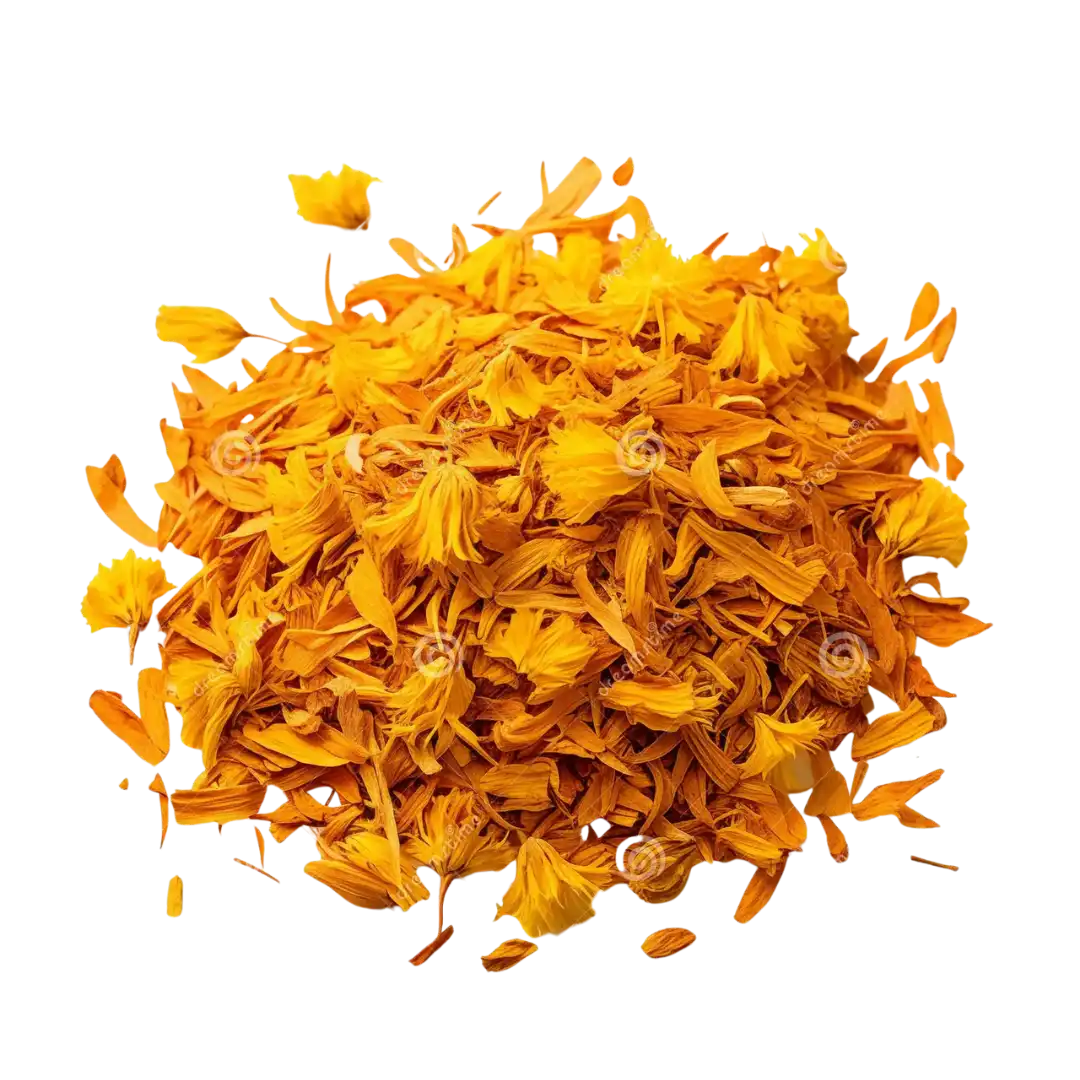
Benefits of Marigold Petals

A natural source of lutein

Provides antioxidant polyphenols

Lutein is studied for eye health

Lutein is studied for skin tone
Key Nutrients
No published data exist on the vitamin or mineral content of a marigold petal infusion. Its key compound, lutein, is a carotenoid rather than a vitamin, and is listed under Bioactive Components.
Bioactive Components
Lutein: The main carotenoid in the petals; commercially available lutein is derived from marigold petals.
Zeaxanthin: A related carotenoid found alongside lutein in marigold preparations.
Polyphenols: Most of the compounds identified in the flower extract were polyphenolic derivatives.
Why Drink Marigold Petals in Your Tea Blends?
Marigold petals add sunny colour and a source of lutein to a blend. Here's what the research does, and doesn't, show:
A Natural Source of Lutein: Marigold petals are the main source of commercial lutein, the carotenoid behind most lutein supplements.
Lutein Studied for Eye Health: In trials of people with age-related macular degeneration, 10 to 20 mg of lutein a day increased macular pigment and improved visual acuity and contrast sensitivity.
Lutein Studied for Skin Tone: In a 12-week trial, a marigold-derived lutein and zeaxanthin supplement improved overall skin tone and luminance compared with placebo.
Provides Antioxidant Polyphenols: The flower is rich in polyphenolic compounds, and a simple hot-water infusion extracts its bioactive and aroma compounds.
The lutein trials used 10 to 20 mg a day in capsules. How much lutein a cup of marigold petal tea delivers has not been measured in published studies, so the eye and skin findings belong to lutein, not to the tea itself.
Scientific Evidence
Your Cart


Your cart is empty
Looks like you haven't added any teas or mugs yet. Let's fix that.