

Article: Tea Meditation: A 10-Minute Ritual to Calm Your Mind
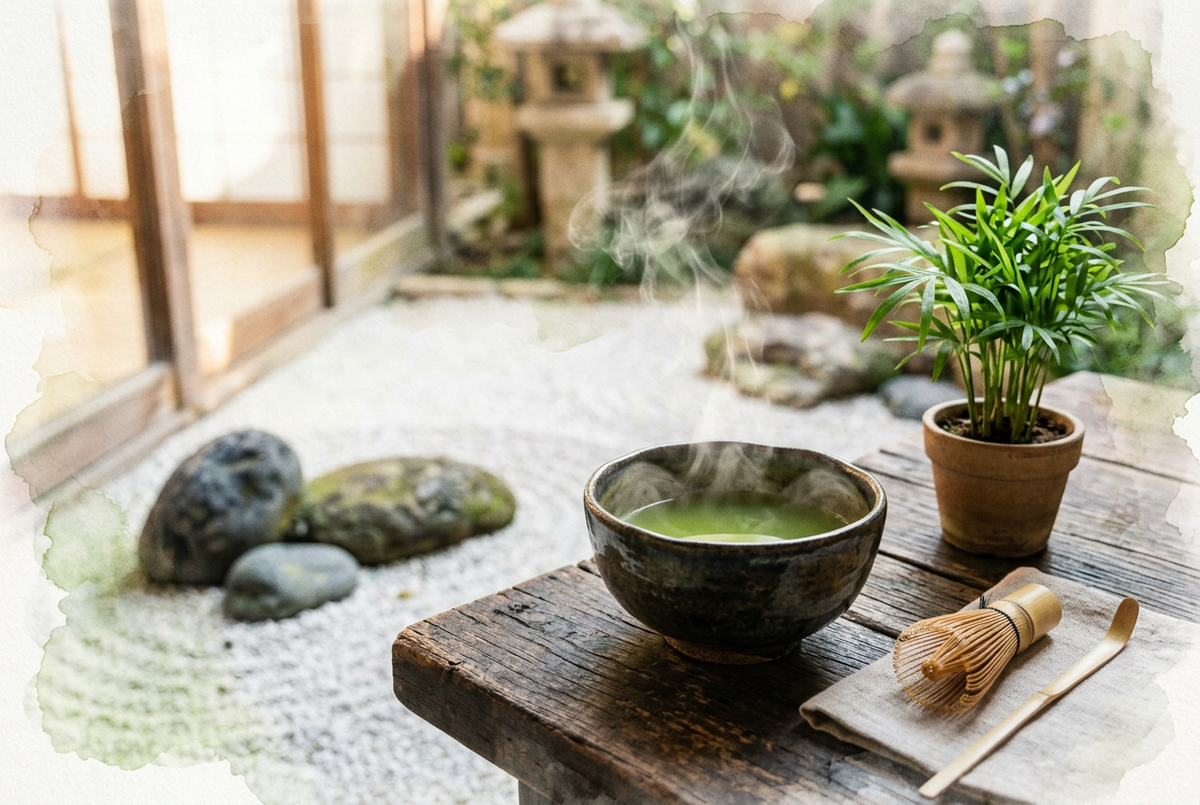
Tea Meditation: A 10-Minute Ritual to Calm Your Mind
Tea meditation is the practice of preparing and drinking a cup of tea with your full attention, using each step, the boiling, the steeping, the aroma, and each sip as an anchor for your mind. It combines three proven calmers: mindfulness, slow breathing, and calming herbs.* Mindfulness practice reliably reduces stress, [1] slow breathing calms the nervous system, [2] and herbs like lavender and chamomile act directly on the brain's calming pathways.* [3] [4]
You do not need a cushion, an app or any experience. If you can make a cup of tea, you can meditate with it. Here is how.
Why Tea Is the Perfect Meditation Tool
Tea gives your wandering mind something gentle to hold onto. Many people struggle with meditation because "clear your mind" feels impossible. Tea meditation gives you something concrete instead: the sound of the kettle, the color of the steeping water, the warmth in your hands, the taste on your tongue. Every sense has a place to rest.
Tea has been part of meditation for more than a thousand years. Zen monks drank green tea to stay calm and alert through long hours of sitting, and the Japanese tea ceremony, chado ("the way of tea"), is a meditation in motion built on harmony, respect, purity and tranquility.
The Science: Why Tea Meditation Works
Mindfulness Lowers Stress
A large meta analysis of mindfulness-based stress reduction in healthy adults found it significantly reduced stress, anxiety, and depression, and improved quality of life. [1] Tea meditation is a simple, everyday form of the same practice.
Slow Breathing Calms the Nervous System
Slow breathing, around six breaths a minute, shifts your body into "rest and digest" mode. A systematic review found that slow breathing increases heart rate variability and relaxation and reduces anxiety and arousal. [2] The steeping time of a cup of tea is the perfect length for a few minutes of slow breaths.
The Tea Itself Helps
In a study at University College London, people who drank tea daily for six weeks had lower cortisol after a stressful task than those drinking a placebo.* [5] Calming herbs add their own effects: lavender's linalool calms through scent and sip,* [3] chamomile's apigenin acts on GABA-A receptors,* [4] and matcha's L-theanine increases calming alpha brain waves.* [6]
A 10-Minute Guided Tea Meditation
Read through once, then practice. Silence your phone and put it in another room.
1. Arrive (1 minute)
Stand at the counter. Feel your feet on the floor. Take three slow breaths. Tell yourself: for the next ten minutes, this is all I am doing.
2. Listen to the Kettle (2 minutes)
Fill the kettle and switch it on. Do not reach for your phone. Simply listen: the first faint hiss, the rising rumble, the rolling boil. Every time your mind wanders to your to-do list, gently bring it back to the sound.
3. Look at the Leaves (30 seconds)
Spoon your tea into your cup or infuser. Notice the colors: purple lavender buds, red rooibos, pink rose petals, green matcha. Notice the texture. Notice the scent of the dry leaves.
4. Pour With Intention (30 seconds)
Pour the water slowly. Watch the leaves move, and the color begins to bloom. Cover your cup.
5. Breathe With the Steep (5 minutes)
This is the heart of the practice. As your tea steeps, breathe in through your nose for 4 counts, out through your mouth for 6 counts. Rest your hands near the warm cup. If thoughts arrive, notice them, and let them go with the next exhale. You do not need to stop thinking. You only need to keep returning.
6. Lift the Lid and Breathe In (30 seconds)
Lift the lid slowly. Let the steam rise to meet you. Breathe in the aroma three times. Notice every note: floral, sweet, earthy, spiced.
7. The First Sip (30 seconds)
Wrap both hands around the cup. Feel its warmth. Take a small sip and hold it on your tongue before swallowing. Notice the flavor change from first touch to finish.
8. Sip Slowly (as long as you like)
Continue sipping slowly, setting the cup down between sips. Look out of a window if you can. When your cup is empty, sit for one more breath and set an intention for the rest of your day or evening.
The 3-Minute Desk Version
No time? Do the short version at your desk.
1. Brew your tea and set it down in front of you.
2. Take six slow breaths (in for 4, out for 6) while it cools.
3. Breathe in the aroma three times.
4. Take three slow, attentive sips.
5. Return to your work.
Three minutes is enough to interrupt the stress cycle. Do it every afternoon, and it becomes a habit your nervous system looks forward to.
The Best Teas for Tea Meditation
- Quiet Mind Tea: lavender, rose, and rooibos. Its aroma is half the meditation, and it is caffeine-free for any time of day.*
- Green Zen Tea: ceremonial matcha. Whisking matcha is a meditation in itself, and its L-theanine supports calm focus.* Best before 2 pm. See Green Tea to Relax.
- Serene Tranquility Tea: warm, spiced rooibos with cardamom, clove, and anise. Perfect for an evening meditation.
- Sleep Restore Tea: chamomile and valerian for a pre-bed practice.*
The Midday Reset bundle was made for daily tea moments: Lean Bloom for a focused morning, Belly Balance after lunch, and Quiet Mind for the afternoon meditation.
When to Practice Tea Meditation
- Morning: set your intention for the day with a matcha meditation.
- Afternoon: the 3-minute desk version, to reset before the evening rush.
- Evening: a full 10-minute practice to separate your day from your night. Pair it with our evening wind down routine.
The Avodah Moment Is a Tea Meditation
Avodah means devotion and service. Tea meditation is how we bring that devotion home: the same attention you give to the people and work you love, turned toward yourself for ten minutes.
That is the Avodah Moment. Not a luxury. Not something you earn after everything is done. A daily practice that refills you so you can keep showing up. The kettle, the steam, the breath, the warm cup in both hands.
You cannot pour from an empty cup. This is where you fill yours.
Shop Quiet Mind Tea | Shop the Midday Reset Bundle
Frequently Asked Questions
What is tea meditation?
A mindfulness practice where you prepare and drink tea with full attention, using the sounds, colors, aroma, and taste as anchors for your mind, combined with slow breathing.
How do you do a tea meditation?
Brew your tea without distractions, breathe slowly (in for 4, out for 6) while it steeps, breathe in the aroma, then sip slowly and attentively. The full practice takes about 10 minutes.
What are the benefits of tea meditation?
It combines mindfulness, which reduces stress and anxiety, slow breathing, which calms the nervous system, and calming herbs that act on the brain's relaxation pathways.*
What tea is best for meditation?
Lavender blends like Quiet Mind for calm, matcha for focused meditation, and chamomile for evening practice.*
How long should a tea meditation be?
Ten minutes is ideal, but even three minutes at your desk helps interrupt the stress cycle.
Can I do tea meditation at work?
Yes. Use the 3-minute desk version: six slow breaths, three breaths of aroma, and three attentive sips.
References
1. Khoury B, Sharma M, Rush SE, Fournier C. Mindfulness-based stress reduction for healthy individuals: a meta-analysis. J Psychosom Res. 2015;78(6):519-528.
2. Zaccaro A, Piarulli A, Laurino M, et al. How breath-control can change your life: a systematic review on psycho-physiological correlates of slow breathing. Front Hum Neurosci. 2018;12:353.
3. Koulivand PH, Khaleghi Ghadiri M, Gorji A. Lavender and the nervous system. Evid Based Complement Alternat Med. 2013;2013:681304.
4. Viola H, Wasowski C, Levi de Stein M, et al. Apigenin, a component of Matricaria recutita flowers, is a central benzodiazepine receptors-ligand with anxiolytic effects. Planta Med. 1995;61(3):213-216.
5. Steptoe A, Gibson EL, Vuononvirta R, et al. The effects of tea on psychophysiological stress responsivity and post-stress recovery: a randomised double-blind trial. Psychopharmacology (Berl). 2007;190(1):81-89.
6. Juneja LR, Chu DC, Okubo T, Nagato Y, Yokogoshi H. L-theanine: a unique amino acid of green tea and its relaxation effect in humans. Trends Food Sci Technol. 1999;10(6-7):199-204.



Leave a comment
This site is protected by hCaptcha and the hCaptcha Privacy Policy and Terms of Service apply.