

The Best Caffeine Free Teas for Sleep
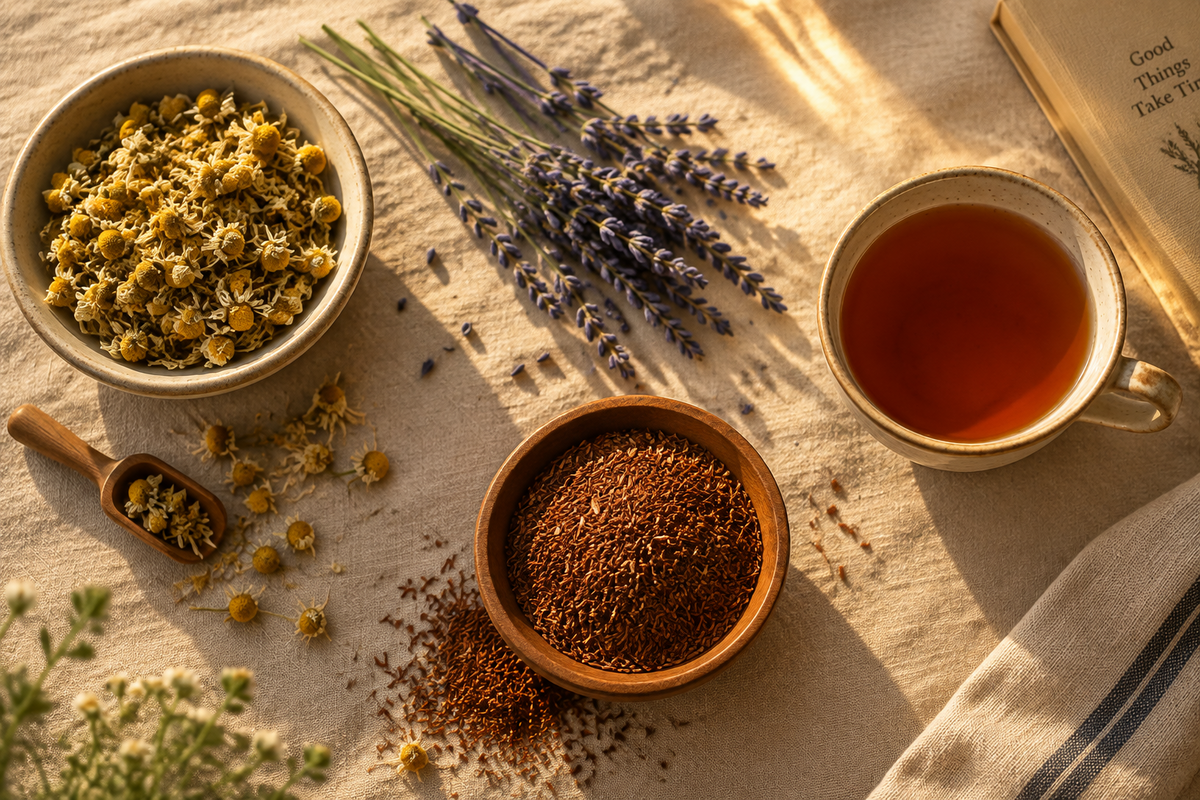
The best caffeine-free teas for sleep are usually herbal infusions such as chamomile, valerian, lavender, lemon balm, and rooibos.
What makes them useful at night starts with something very simple: they do not add caffeine to your evening. That matters because caffeine is a stimulant, and its effects can last for hours. The National Heart, Lung, and Blood Institute notes that caffeine can interfere with sleep and may remain active for up to eight hours in some people.So if you are choosing a tea specifically for bedtime, caffeine-free is the first thing to check.
The second is the ingredient list. Not every product with words like “sleep,” “night,” “calm” or “bedtime” on the front is necessarily caffeine-free. Some blends contain green tea, black tea or other ingredients from the tea plant, which naturally contain caffeine unless they have been decaffeinated. The good news is that there are plenty of naturally caffeine-free herbal options that fit easily into an evening wind-down routine.
Why caffeine-free is non-negotiable for a sleep tea
A bedtime tea should not work against the routine you are trying to create. Caffeine promotes alertness, which is useful in the morning but less helpful when you are preparing for bed. Depending on the person, caffeine consumed in the afternoon or evening can still affect sleep hours later. That is why sleep-health guidance recommends avoiding caffeine close to bedtime.
This is also where terminology gets confusing. Technically, traditional “tea” comes from the Camellia sinensis plant. Black tea, green tea, white tea, and oolong all come from this plant and naturally contain caffeine. Chamomile, rooibos, lavender, valerian, and lemon balm are different. They are herbal infusions, sometimes called tisanes, made from flowers, leaves, roots, or other plant parts rather than from the traditional tea plant. That is why they can be naturally caffeine-free.
For everyday shopping, you do not need to worry too much about the technical distinction between “tea” and “tisane.” What matters at bedtime is checking what is actually in the blend.
The best caffeine-free options
Chamomile:
Chamomile is probably the best-known caffeine-free bedtime tea.
It has been used traditionally for relaxation and sleep for generations, and its gentle floral taste makes it easy to drink on its own or blend with other herbs.
Chamomile naturally contains no caffeine because it is made from flowers rather than the tea plant. It is a traditional calming herb and a naturally caffeine-free bedtime option rather than as a guaranteed sleep treatment.
Chamomile is also generally considered safe in the amounts commonly found in teas, although people with allergies to ragweed, chrysanthemums, marigolds, or daisies may be more likely to experience an allergic reaction.
Best for: someone who wants a gentle, familiar caffeine-free evening tea.
Valerian:
Valerian has a stronger reputation as a nighttime herb. Unlike chamomile, it is a root, and its flavor is much earthier and more distinctive. That is why valerian is often blended with more pleasant-tasting herbs rather than served alone.
Valerian has a long history of traditional use for sleep and is a traditional bedtime herb. It can still fit well into a caffeine-free sleep blend, particularly when paired with herbs that soften its flavor. Because valerian may have sedating effects, people who use sedative medications or alcohol should be more cautious about combining them.
Best for: someone who prefers a more traditional sleep-focused herbal blend and is comfortable with a stronger, earthy flavor.
Lavender:
Lavender is one of the most recognizable evening herbs because of its aroma. It is naturally caffeine-free and is often added to bedtime blends to bring a soft floral note to the cup. For a bedtime blend, its biggest practical role may simply be sensory. The smell and flavor can make the cup feel distinctly different from something you would drink during a busy afternoon. That difference can help make the tea feel like part of a nightly relaxing routine.
Best for: someone who enjoys floral flavors and wants a more sensory wind-down experience.
Lemon balm:
Lemon balm is another naturally caffeine-free herb commonly found in calming tea blends. It has a mild lemony flavor without the sharp acidity of actual lemon juice, making it easy to pair with chamomile, lavender, or other evening herbs. Its lighter flavor makes it especially useful in blends where stronger herbs such as valerian might otherwise dominate.
Best for: someone who wants a gentle, fresh-tasting caffeine-free tea rather than a heavily floral or earthy blend.
Rooibos:
Rooibos is a little different from the other teas on this list. It is not traditionally known as a sleep herb. What makes it useful at night is that it is naturally caffeine-free and has a smooth, slightly sweet flavor that works well as the base of an evening tea. Because rooibos is naturally caffeine-free, it can give you the experience of drinking a full-bodied cup without bringing caffeine into your bedtime routine. That makes it particularly useful for people who miss drinking black tea in the evening but want something more sleep-friendly. Rooibos is often paired with herbs, spices, or floral ingredients to create more complex nighttime blends.
Best for: someone who wants a fuller, richer caffeine-free cup without relying on a traditional “sleep herb.”
The one label trap to watch for
Some "bedtime" or "sleep" blends add green or black tea for flavor or antioxidants, and those do contain caffeine. The rule: if you see green tea, black tea, white tea, or just "tea" on the label, it is not caffeine-free. If you see only herbs, flowers, and roots, it is. Our own Sleep Restore blends chamomile and valerian with gentle, caffeine-free herbs and no tea leaf, so it stays completely caffeine-free, and the Evening Unwind Bundle is caffeine-free throughout.
Frequently asked questions
What is the best caffeine-free tea for sleep?
Chamomile, valerian, lavender, lemon balm, and rooibos are all naturally caffeine-free options commonly used in evening teas. There is no single “best” tea for everyone. Chamomile is a gentle traditional choice, valerian is commonly used in sleep-focused blends, and rooibos provides a fuller caffeine-free base.
Is chamomile tea caffeine-free?
Yes. Chamomile is naturally caffeine-free because it is made from chamomile flowers rather than the caffeinated tea plant.
Is green tea good for sleep?
Not ideally, green tea naturally contains caffeine, so it is not the most obvious choice if your goal is to avoid caffeine before sleep. Some decaffeinated green teas are available, but decaffeinated and completely caffeine-free are not necessarily the same thing.
Does rooibos have caffeine?
No. Rooibos is naturally caffeine-free, which makes it a useful evening alternative to black or green tea.
Is decaf tea the same as caffeine-free tea?
No. Naturally caffeine-free teas contain no caffeine-producing tea leaf to begin with. Decaffeinated tea starts with a caffeinated tea and has most of the caffeine removed, so small amounts can remain.
Does valerian tea help you sleep?
Valerian has a long history of traditional use for sleep, but clinical studies have produced inconsistent results and its effectiveness for insomnia has not been established. It is best viewed as a traditional bedtime herb rather than a proven insomnia treatment.
How can I tell if a bedtime tea has caffeine?
Read the ingredient list. Black tea, green tea, white tea, oolong, and matcha naturally contain caffeine unless specifically decaffeinated. Herbal ingredients such as chamomile, rooibos, lavender, and lemon balm are naturally caffeine-free.


Leave a comment
This site is protected by hCaptcha and the hCaptcha Privacy Policy and Terms of Service apply.