

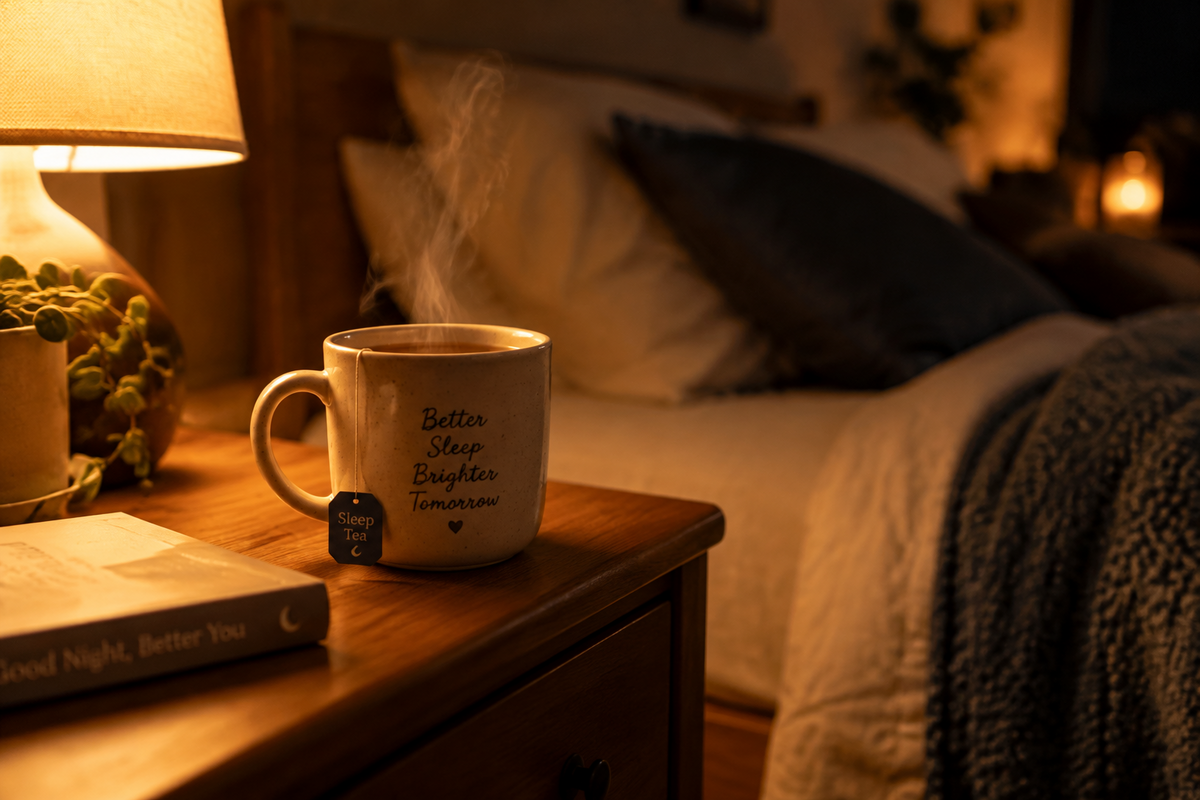
Is It Safe to Drink Sleep Tea Every Night?
For many healthy adults, drinking a caffeine-free herbal tea every evening can be a reasonable part of a bedtime routine. But the answer depends on what is actually in your cup.
Sleep tea is not one single ingredient. One blend may contain chamomile and lavender, while another includes valerian, lemon balm, or several herbs together. Each ingredient has its own safety considerations, which is why it is better to look at the label rather than assume every herbal sleep tea is automatically appropriate for nightly use. Chamomile, for example, is generally considered safe in the amounts commonly found in tea and food. Valerian has also been widely used in sleep products, but there is less certainty about its long-term safety. Certain herbs can interact with medications, and pregnancy, breastfeeding, and allergies can also change what is appropriate.
So, is it safe to drink sleep tea every night? For many people, yes, particularly when the tea is caffeine-free, consumed in normal beverage amounts, and made with herbs that are appropriate for them. But “herbal” does not automatically mean risk-free.
Why a nightly cup of tea is fine, and even helpful
One of the biggest benefits of an evening tea may be surprisingly simple: repetition. Sleep does not happen in isolation from the rest of your evening. What you do before bed, the lighting, the screens, the pace of your activities, and the consistency of your routine can all affect how prepared you feel to sleep.
A warm cup of caffeine-free tea can become an anchor in that routine.
- You boil the water.
- You let the tea steep.
- You sit down.
- You stop adding new tasks to the day.
That repeated pause can help separate daytime activity from bedtime. This is different from claiming that herbal tea works like a sleeping pill. Research on herbs such as chamomile and valerian for insomnia is limited and inconsistent. Chamomile has a long history of traditional use, but there is no strong clinical evidence showing that it treats insomnia. Research on Valerian has also produced mixed results. That does not mean a nightly cup has no value.
It means the most realistic way to think about sleep tea is as one part of a calming bedtime routine rather than a guaranteed treatment for poor sleep.
Is sleep tea actually good for you?
That depends on what you mean by “good for you.”A caffeine-free herbal tea can have several practical advantages in the evening.
First, it gives you a drink without caffeine. That matters because caffeine is a stimulant, and drinking it too close to bedtime can work against the sleep routine you are trying to build.
Second, tea can replace habits that may be more stimulating in the evening. Instead of reaching for another coffee, scrolling while working late, or pouring an alcoholic drink, making tea can create a natural stopping point.
Third, many herbal teas contain naturally occurring plant compounds, although the types and amounts vary widely depending on the ingredients and how the tea is prepared.
What I would not do is claim that drinking sleep tea every night automatically improves immunity, treats insomnia or produces broad health benefits. The evidence is simply not strong enough to support those promises. The more defensible benefit is that a caffeine-free cup can support a quieter, more consistent evening routine. And sometimes that simple habit is exactly what makes it sustainable.
Does your body become dependent on sleep tea?
This is where the original comparison with sleeping medication needs more nuance. A typical cup of herbal tea does not work in the same way as prescription sedative medication, and drinking a familiar bedtime tea is not the same thing as developing drug dependence. But that does not mean every herb should automatically be treated as harmless or suitable indefinitely.
Valerian is a good example. It is commonly included in sleep products. It also should not be combined casually with alcohol or sedatives because of the possibility of additive effects. It can also be useful to distinguish between physical dependence and habit.
You may become accustomed to making tea before bed because it is part of your routine. That is not necessarily a problem. Most of us have familiar cues around sleep: brushing our teeth, dimming the lights, reading, or arranging the room a certain way. The question is whether the tea remains one supportive part of your evening rather than something you believe you absolutely cannot sleep without.
The ingredients matter more than the words “sleep tea”
The safest way to decide whether a sleep tea works for nightly use is to read the ingredient list.
Chamomile
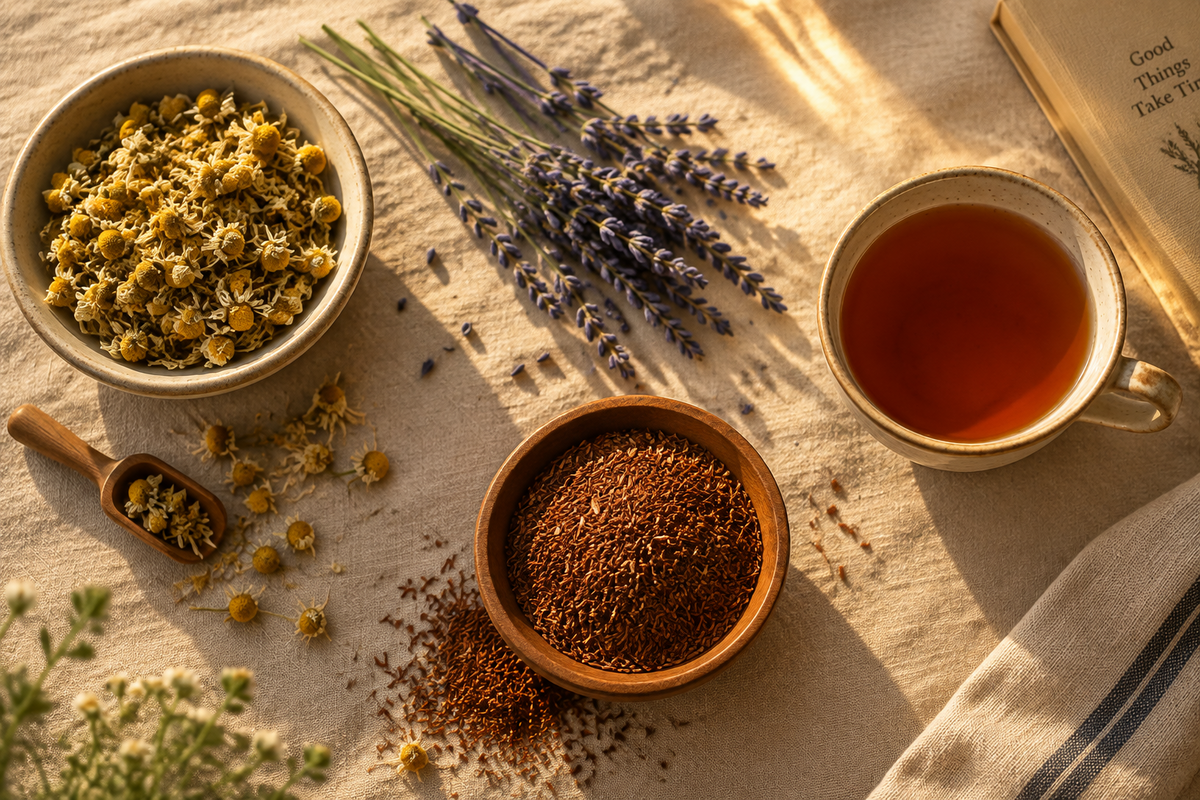
Chamomile is one of the most common ingredients in bedtime tea.
According to the U.S. National Center for Complementary and Integrative Health, chamomile is likely safe when consumed in amounts commonly found in foods and teas. Side effects are uncommon, but allergic reactions are possible. People who are allergic to plants related to chamomile, including ragweed, chrysanthemums, marigolds, and daisies, may be more likely to react to it. There have also been reports of interactions with medications, including warfarin, and there are theoretical concerns about interactions with sedative medicines.
Valerian
Valerian is another traditional sleep ingredient. Unlike chamomile, its taste is quite strong and earthy, which is why it often appears in blends rather than on its own. Because valerian may have sedating effects, it should not be casually combined with alcohol or sedative medications. That does not mean valerian tea is inherently unsafe. It means it deserves more consideration than simply assuming anything herbal can be taken indefinitely.
Other herbs
Lavender, lemon balm, passionflower, and other herbs also appear in bedtime blends. Their safety profiles and evidence differ, which is another reason to assess the actual ingredients rather than relying only on front-of-package words like “sleep,” “night,” or “calm.” If a blend contains multiple herbs and you take prescription medication, it's sensible to ask a pharmacist or healthcare professional to review the ingredient list.
The few situations where you should be more cautious
Nightly sleep tea is safe for most people, but check with your doctor first if any of these apply:
You are pregnant or breastfeeding
There is limited information about the safety of several common sleep herbs during pregnancy and breastfeeding, including chamomile and valerian.
You take medication
Herbs can interact with prescription and over-the-counter drugs. Chamomile has reported interactions with warfarin and may interact with some other medications, while valerian should be approached cautiously alongside sedatives.
You have plant allergies
People allergic to ragweed, chrysanthemums, daisies, or marigolds may be more likely to react to chamomile.
You drink alcohol close to bedtime
This is particularly relevant for valerian because combining it with substances that have potential sedative effects may increase drowsiness.
You have a medical condition or a persistent sleep problem
If difficulty sleeping continues for weeks, repeatedly disrupts your daytime functioning, or suddenly changes without an obvious explanation, tea should not be used to mask the underlying issue.
How much sleep tea should you drink at night?
For most people, one normal cup as part of an evening routine is a practical place to start. There is rarely a reason to assume that two, three or four cups will work better.
More tea also means more liquid close to bedtime, which can create another problem: waking during the night to use the bathroom. If that happens to you, try having your tea earlier in the evening rather than immediately before getting into bed. The goal is not to consume as much sleep tea as possible. The goal is to create an evening ritual that feels comfortable enough to repeat.
What to look for in a nightly sleep tea
If you want a tea specifically for bedtime, keep the ingredient list simple enough that you understand what you are drinking.
Look for a blend that is:
- genuinely caffeine-free
- clearly labelled with its individual herbs
- made without hidden black, green or white tea
- enjoyable enough that you actually want to drink it
- appropriate for your medications, allergies and individual health circumstances
Our Sleep Restore combines chamomile and valerian with caffeine-free herbal ingredients and is designed around that evening wind-down moment.
If you are comparing different nighttime options, our broader guide to tea for sleep explains the herbs commonly used in bedtime blends and what each one brings to the cup.
Making nightly tea part of the ritual
There is another reason people keep coming back to a cup of tea before bed. It feels like a pause. A nightly routine does not have to be complicated. Sometimes it can be as small as putting the kettle on, letting the lights get softer, and giving yourself five minutes in which nothing else needs to happen.
That is the idea behind an Avodah Moment: a small act of care woven into a meaningful life. Not something that promises to solve everything. Just a recognizable moment that says the day is winding down. Used that way, your evening tea is not something you need to “depend on.” It is simply part of how you make space for rest.
Frequently asked questions
Can you drink sleep tea every night?
For many healthy adults, a caffeine-free herbal tea can be consumed regularly in normal beverage amounts. However, safety depends on the ingredients. Chamomile is generally considered safe in amounts commonly used in tea, while less is known about the long-term safety of herbs such as valerian.
Is it bad to rely on tea to sleep?
Having tea as part of a consistent bedtime routine is not the same as becoming physically dependent on medication. However, herbal products can still have biological effects. If you feel unable to sleep without a specific product or have persistent insomnia, it is worth looking at the underlying sleep problem rather than simply adding more tea.
Is sleep tea good for you?
A caffeine-free herbal tea can be a useful part of a healthy evening routine, particularly because it replaces caffeinated drinks and creates a reason to slow down. But no herbal sleep tea should be presented as a proven treatment for insomnia, and the benefits and risks depend on its ingredients.
Who should not drink sleep tea nightly?
People who are pregnant or breastfeeding, take prescription medication, use sedatives, have relevant plant allergies, or have medical conditions should check the ingredient list and speak with a healthcare professional when appropriate. Chamomile and valerian both have specific precautions.
Can sleep tea interact with medication?
Yes. Herbal does not mean interaction-free. Chamomile has reported interactions with warfarin and may interact with other drugs, while valerian should not be casually combined with sedatives or alcohol.
How long before bed should I drink sleep tea?
There is no single medically required time. Practically, drinking it around 30 to 60 minutes before bed gives you time to enjoy the tea as part of your wind-down routine without drinking a large amount of liquid immediately before sleep.



Leave a comment
This site is protected by hCaptcha and the hCaptcha Privacy Policy and Terms of Service apply.