
Natural Remedies for Insomnia That Actually Help
The natural remedies for insomnia with the strongest research are a consistent sleep schedule, a cool, dark bedroom, cutting late caffeine and alcohol, morning daylight and exercise, a real wind-down routine, and calming herbs like valerian root and chamomile.* [1] [2] [3] Each one works on its own. Stacked together, they are powerful.
Here is how each remedy works, how to use it, and where herbal tea fits.
The Habits That Help Most
1. Keep a Consistent Schedule
Go to bed and wake up at the same time every day, even on weekends. A steady schedule anchors your body clock, which decides when you feel sleepy. It is the foundation every other remedy builds on.
2. Cool and Darken Your Bedroom
Aim for about 18°C (65°F) and block out light. Your core temperature needs to fall to sleep deeply, and darkness lets melatonin rise. [4] [5]
3. Cut Caffeine After Early Afternoon
Caffeine lingers for hours. In a sleep study, caffeine six hours before bed cut more than an hour from total sleep. [6] Set a hard stop around 2 pm and switch to caffeine-free herbal tea.
4. Go Easy on Alcohol
Alcohol helps you fall asleep but fragments the second half of the night, a common hidden cause of insomnia. [7]
5. Get Daylight and Movement
Morning light and regular exercise strengthen your sleep drive. A meta analysis found physical activity improves sleep quality and how quickly you fall asleep. [8] A morning walk does both.
6. Wind Down Properly
Give yourself a calm, screen-light hour before bed. Room light before bedtime suppresses melatonin [5], and writing a five-minute to-do list helped people fall asleep faster in a sleep lab study. [9] This is where a nightly cup of tea fits most naturally. See our evening wind down routine.
The Herbal Remedies With the Most Research
Calming herbs are among the oldest and most researched natural remedies for insomnia.* They work best as a nightly ritual.
Valerian Root
The most powerful herbal sleep remedy.* Its valerenic acid binds to GABA-A receptors and amplifies GABA, the brain's main calming signal.* [10]
- A water extract of valerian improved sleep quality and helped people fall asleep faster, especially poor sleepers.* [2]
- A review of around 60 studies concluded valerian improves sleep quality and eases anxiety.* [11]
- In a sleep lab study, two weeks of valerian increased deep, slow-wave sleep.* [12]
Read more in Valerian Root Tea for Sleep.
Chamomile
The most studied sleep herb. Its apigenin binds to the brain's calming receptors.* [13] A 2024 meta analysis of 10 clinical trials found chamomile improved sleep, especially staying asleep.* [3] See Does Chamomile Tea Help You Sleep?
Lavender, Lemon Balm and Passionflower
Three calming supporters with clinical backing. Lavender tea eased anxiety in older adults, [14] lemon balm eased anxiety and sleep problems in people under stress, [15] and passionflower tea improved sleep quality versus placebo.* [16]
The Best Way to Take Them: A Nightly Tea
Valerian and chamomile work best together, every night. Chamomile calms the mind; valerian deepens sleep. That is the formula behind Sleep Restore Tea: valerian root and chamomile with peppermint, spearmint, lemongrass, hibiscus, rosehip and blue cornflower, 100% caffeine-free. Valerian's benefits build over two to four weeks of nightly use.* [17]
For a racing mind, our lavender-led Quiet Mind Tea is a beautiful companion, and the Evening Unwind bundle brings Sleep Restore, Quiet Mind and Serene Tranquility together for a complete caffeine-free evening.
How to Stack Your Remedies Tonight
- 2 pm: last caffeine of the day.
- Early evening: finish dinner and any alcohol a few hours before bed.
- 60 minutes before bed: dim the lights and cool the bedroom.
- 45 minutes before bed: brew Sleep Restore, covered, for 5 to 7 minutes.
- 30 minutes before bed: phone away; write tomorrow's list.
- Lights out at the same time every night, and up at the same time every morning.
What to Skip
- Alcohol as a nightcap: it helps you fall asleep, then breaks up the second half of your night. [7]
- Megadose melatonin at the wrong time: melatonin is a timing signal, not a sedative. See Melatonin vs Herbal Tea for Sleep.
- Scrolling in bed: the light and stimulation work against every remedy above.
The Avodah Moment: A Remedy You Look Forward To
Avodah means devotion and service. The best remedy is the one you will actually keep doing, night after night, and the best way to keep doing something is to love it.
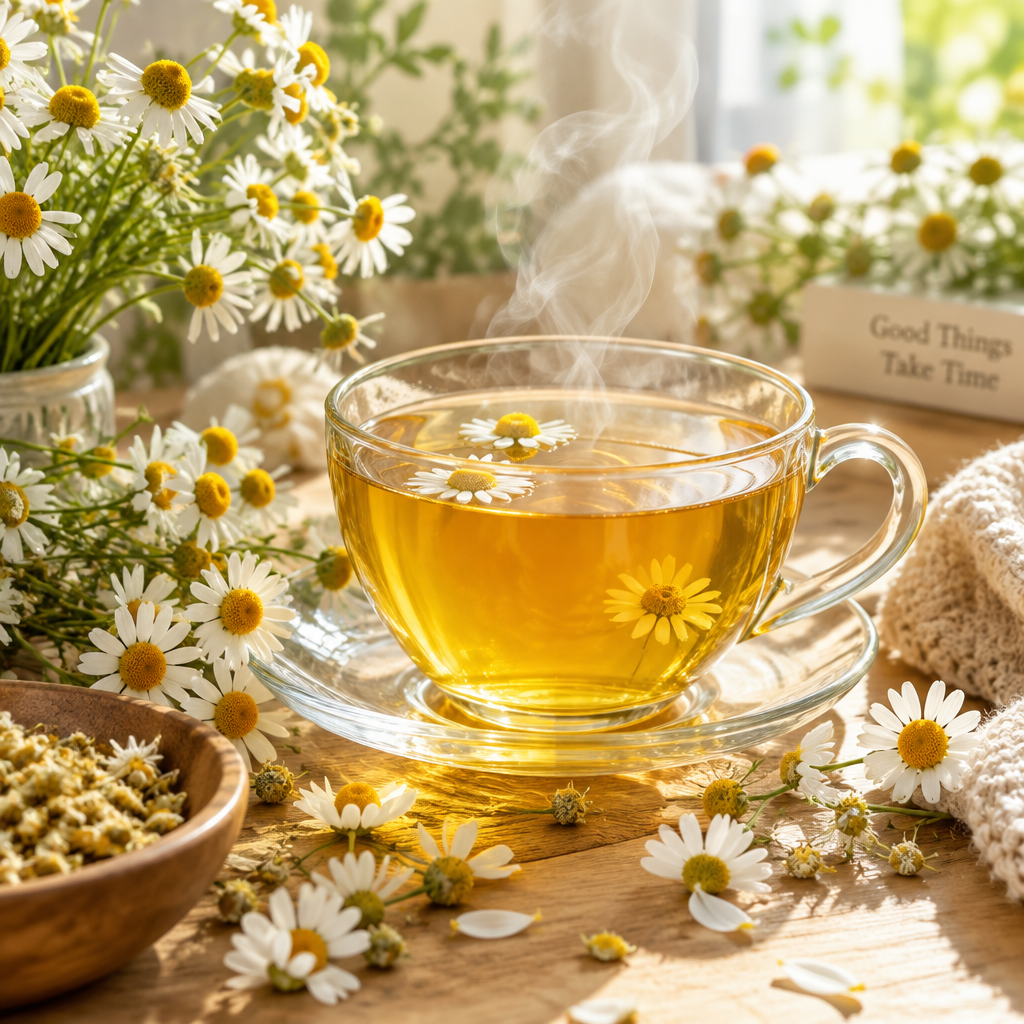
So make your remedy a pleasure. Choose your favourite mug. Brew your Sleep Restore and cover it while the kitchen fills with the scent of chamomile and mint. Sit somewhere soft, lights low, and sip slowly. Not as a chore on a sleep checklist, but as five minutes that belong to you at the end of a day you gave to everyone else.
You cannot pour from an empty cup. This is where you fill yours.
Shop Sleep Restore Tea | Shop the Evening Unwind Bundle
Frequently Asked Questions
What is the best natural remedy for insomnia?
Stacking remedies works best: a consistent schedule, a cool dark room, no late caffeine or alcohol, daylight and exercise, a wind-down routine and a nightly valerian and chamomile tea.*
What can I drink to help insomnia?
A caffeine-free tea built on valerian root and chamomile, the two most researched sleep herbs, about 45 minutes before bed.*
Do natural sleep remedies really work?
Yes. Sleep habits have strong research behind them, and valerian and chamomile are linked in clinical trials to better sleep quality and staying asleep.*
Is valerian a good natural sleep aid?
Yes. Valerian improved sleep quality and sleep onset in clinical research and increased deep sleep in a sleep lab study.* It is not habit forming.
How long do natural sleep remedies take to work?
Habit changes and calming teas often help within days, and valerian's benefits build over two to four weeks of nightly use.*
When should I see a doctor about insomnia?
If you struggle to sleep most nights for several weeks and it affects your day, see your doctor. Cognitive behavioural therapy for insomnia (CBT-I) is the first-line treatment for chronic insomnia, [1] and the habits and teas above pair well with it.
References
1. Trauer JM, Qian MY, Doyle JS, Rajaratnam SM, Cunnington D. Cognitive behavioral therapy for chronic insomnia: a systematic review and meta-analysis. Ann Intern Med. 2015;163(3):191-204.
2. Leathwood PD, Chauffard F, Heck E, Munoz-Box R. Aqueous extract of valerian root (Valeriana officinalis L.) improves sleep quality in man. Pharmacol Biochem Behav. 1982;17(1):65-71. https://pubmed.ncbi.nlm.nih.gov/7122669/
3. Kazemi A, Shojaei-Zarghani S, Eskandarzadeh P, Hashempur MH. Effects of chamomile (Matricaria chamomilla L.) on sleep: a systematic review and meta-analysis of clinical trials. Complement Ther Med. 2024;84:103071. https://www.sciencedirect.com/science/article/pii/S0965229924000591
4. Okamoto-Mizuno K, Mizuno K. Effects of thermal environment on sleep and circadian rhythm. J Physiol Anthropol. 2012;31:14.
5. Gooley JJ, Chamberlain K, Smith KA, et al. Exposure to room light before bedtime suppresses melatonin onset and shortens melatonin duration in humans. J Clin Endocrinol Metab. 2011;96(3):E463-E472.
6. Drake C, Roehrs T, Shambroom J, Roth T. Caffeine effects on sleep taken 0, 3, or 6 hours before going to bed. J Clin Sleep Med. 2013;9(11):1195-1200.
7. Ebrahim IO, Shapiro CM, Williams AJ, Fenwick PB. Alcohol and sleep I: effects on normal sleep. Alcohol Clin Exp Res. 2013;37(4):539-549.
8. Kredlow MA, Capozzoli MC, Hearon BA, Calkins AW, Otto MW. The effects of physical activity on sleep: a meta-analytic review. J Behav Med. 2015;38(3):427-449.
9. Scullin MK, Krueger ML, Ballard HK, Pruett N, Bliwise DL. The effects of bedtime writing on difficulty falling asleep: a polysomnographic study comparing to-do lists and completed activity lists. J Exp Psychol Gen. 2018;147(1):139-146.
10. Benke D, Barberis A, Kopp S, et al. GABA A receptors as in vivo substrate for the anxiolytic action of valerenic acid, a major constituent of valerian root extracts. Neuropharmacology. 2009;56(1):174-181. https://pubmed.ncbi.nlm.nih.gov/18602406/
11. Shinjyo N, Waddell G, Green J. Valerian root in treating sleep problems and associated disorders: a systematic review and meta-analysis. J Evid Based Integr Med. 2020;25:2515690X20967323. https://journals.sagepub.com/doi/10.1177/2515690X20967323
12. Donath F, Quispe S, Diefenbach K, Maurer A, Fietze I, Roots I. Critical evaluation of the effect of valerian extract on sleep structure and sleep quality. Pharmacopsychiatry. 2000;33(2):47-53.
13. Viola H, Wasowski C, Levi de Stein M, et al. Apigenin, a component of Matricaria recutita flowers, is a central benzodiazepine receptors-ligand with anxiolytic effects. Planta Med. 1995;61(3):213-216.
14. Bazrafshan MR, Jokar M, Shokrpour N, Delam H. The effect of lavender herbal tea on the anxiety and depression of the elderly: a randomized clinical trial. Complement Ther Med. 2020;50:102393.
15. Cases J, Ibarra A, Feuillere N, Roller M, Sukkar SG. Pilot trial of Melissa officinalis L. leaf extract in the treatment of volunteers suffering from mild-to-moderate anxiety disorders and sleep disturbances. Med J Nutrition Metab. 2011;4(3):211-218.
16. Ngan A, Conduit R. A double-blind, placebo-controlled investigation of the effects of Passiflora incarnata (passionflower) herbal tea on subjective sleep quality. Phytother Res. 2011;25(8):1153-1159.
17. Bent S, Padula A, Moore D, Patterson M, Mehling W. Valerian for sleep: a systematic review and meta-analysis. Am J Med. 2006;119(12):1005-1012.


Leave a comment
This site is protected by hCaptcha and the hCaptcha Privacy Policy and Terms of Service apply.