

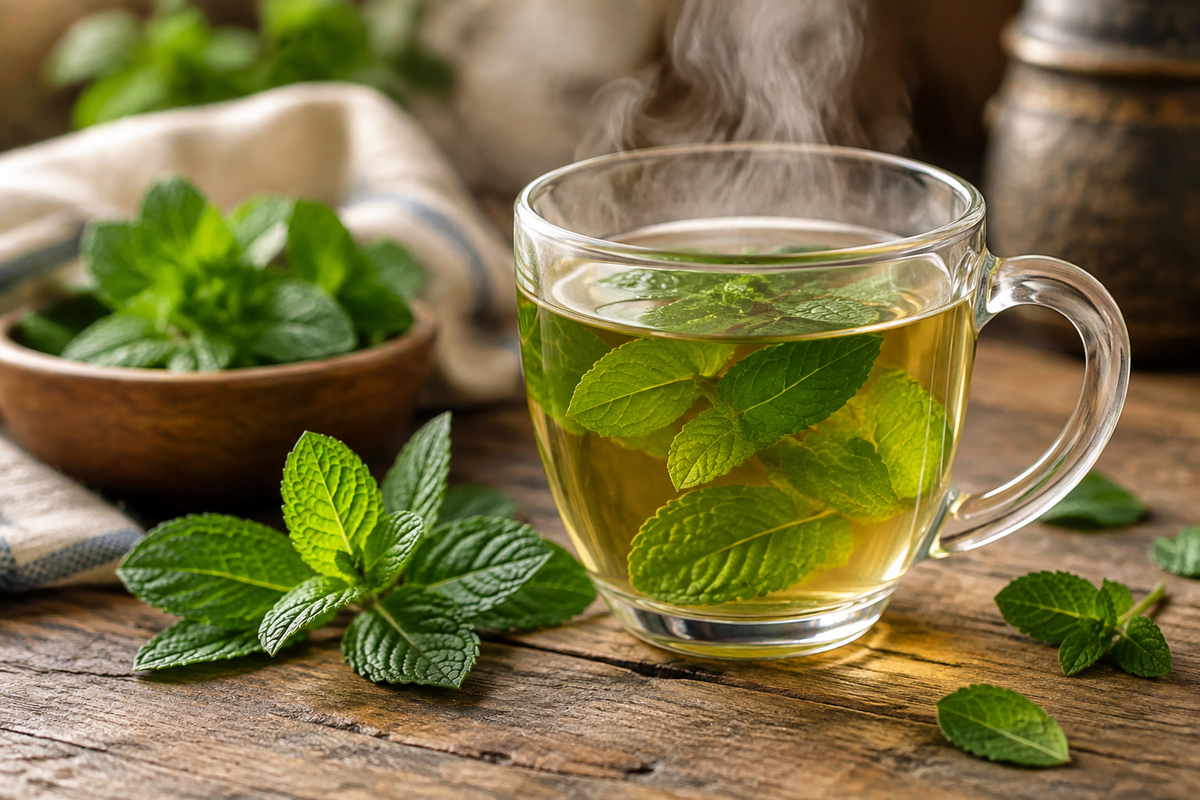
Peppermint Tea for Bloating, Gas and Stomach Cramps
Peppermint tea eases bloating, gas, and stomach cramps because the menthol in peppermint leaves relaxes the smooth muscle of your gut wall, which lets trapped gas pass and calms the spasms that cause cramping. It is the herb with the most human research behind it for this kind of discomfort, which is why peppermint is the lead ingredient in Avodah's Belly Balance.
The one thing to understand: peppermint relaxes the gut muscle
Peppermint leaves are rich in two essential oils, menthol and menthone, plus an antioxidant called rosmarinic acid. Menthol is the active ingredient worth knowing. It is an antispasmodic, which means it helps relax tense muscles. In your digestive tract, the walls are lined with smooth muscle that squeezes and releases to move food and gas along. When that muscle clenches or goes into spasm, you feel it as cramping, and gas gets trapped behind the tightness. Menthol eases that muscle, so the spasm settles, and trapped gas can move through instead of building up and stretching your belly.
That single mechanism is why one herb helps three complaints at once. Bloating, gas, and cramping are often the same problem, wearing different clothes: a gut that is too tense to move things along smoothly.
What the research shows
Peppermint has been studied most in people with irritable bowel syndrome, or IBS, a condition where bloating, gas, and cramping are the main symptoms. Across several reviews, peppermint consistently beat placebo for easing abdominal pain and bloating (systematic review and meta-analysis; BMJ meta-analysis; earlier meta-analysis). The effect is real and repeatable, which is more than can be said for most herbal remedies.
Here is the honest caveat, and it is worth reading before you brew. Almost all of that strong research used peppermint oil in enteric-coated capsules, a concentrated and carefully delivered dose, not a cup of tea. Peppermint tea contains the same menthol and works by the same muscle-relaxing mechanism, but at a gentler, food-level dose. So think of tea as a mild, pleasant way to get a lighter version of that effect, not as a substitute for a clinical capsule. We would rather tell you that plainly than let you expect more than a cup can give.
Peppermint tea for gas
Gas becomes uncomfortable when it gets trapped. A tense or slow gut holds onto it, and the pressure builds until your abdomen feels tight and swollen. By relaxing the gut wall, peppermint helps that trapped gas move along and pass, which is what eases the bloated, full feeling. It does not stop your body from making gas, so it will not help much with the volume of gas from, say, a very high-fibre meal. What it does is help you move gas more comfortably.
Peppermint tea for stomach cramps
Cramping is muscle spasm, so it is the symptom peppermint's antispasmodic action is best suited to. When a tense gut grips and releases painfully, the menthol in a warm cup helps that muscle let go. This is the same reason peppermint is a classic choice for the crampy discomfort that often comes alongside bloating after a meal.
When peppermint is the wrong choice
One clear caution. The same menthol that relaxes gut muscle also relaxes the ring of muscle at the top of your stomach, the valve that keeps stomach acid down. For most people that is harmless. But if you get acid reflux or heartburn, peppermint can loosen that valve and make symptoms worse, so it is the one situation where you should choose ginger or fennel instead. If you are pregnant or taking medication, a normal cup of peppermint tea is generally considered fine, but check with your doctor first.
How to use it
Sip a cup after eating, when gas, cramping, and pressure tend to build. Steep peppermint for five to seven minutes with near-boiling water so the menthol has time to release. Because peppermint is naturally caffeine-free, you can drink it in the evening after dinner without it affecting your sleep.
That after-dinner cup is also a small, warm pause that belongs to you. You cannot pour from an empty cup, and turning five quiet minutes back toward yourself is a gentle way to end the day while your digestion settles.
The easy pick: Belly Balance
Belly Balance is built around peppermint leaves, traditionally used to ease bloating, gas, and cramps, on a naturally caffeine-free rooibos base that is gentle on the stomach. Calendula adds a soft, soothing note, a little cacao gives a smooth cocoa-mint finish, and stevia leaf lends light sweetness without added sugar. Being caffeine-free, it suits an after-dinner cup as easily as a midday one. You can read the full evidence on the peppermint leaves library page. If bloating is a regular visitor, the Gut Reset bundle pairs Belly Balance with Avodah's other digestion teas, so you have the right cup for whatever discomfort shows up.
Frequently asked questions
Does peppermint tea help with bloating?
Yes. Its menthol relaxes the gut muscle that traps gas and causes the tight, swollen feeling, so trapped gas can pass. The strongest evidence is from peppermint oil studies in IBS; tea is a gentler version of the same effect.
Does peppermint tea help with gas?
It helps you pass trapped gas more comfortably by relaxing the gut wall. It does not reduce how much gas your body makes, so it works best for the trapped, pressured kind rather than sheer volume.
Is peppermint tea good for stomach cramps?
Yes. Cramping is a muscle spasm, and peppermint is an antispasmodic, so it helps the gripping gut muscle relax. This is one of its best-suited uses.
How long does peppermint tea take to work, and when should I drink it?
Many people feel relief within about 30 to 60 minutes as the muscle relaxes. Sip it after meals or when cramping and bloating build. It is caffeine-free, so any time of day is fine.
Can peppermint tea upset your stomach or cause reflux?
For most people, it settles the stomach. But because menthol relaxes the valve at the top of the stomach, it can worsen acid reflux or heartburn in people prone to them. If that is you, choose ginger or fennel instead.
Sources
Peppermint oil for the treatment of irritable bowel syndrome: a systematic review and meta-analysis. https://pubmed.ncbi.nlm.nih.gov/24100754/
Effect of fibre, antispasmodics, and peppermint oil in the treatment of irritable bowel syndrome: systematic review and meta-analysis. BMJ. https://www.bmj.com/content/337/bmj.a2313
Peppermint oil for irritable bowel syndrome: a critical review and meta-analysis. https://www.sciencedirect.com/science/article/abs/pii/S000292709800224X


Leave a comment
This site is protected by hCaptcha and the hCaptcha Privacy Policy and Terms of Service apply.