
Best Tea for Bloating: What Actually Works, and Why
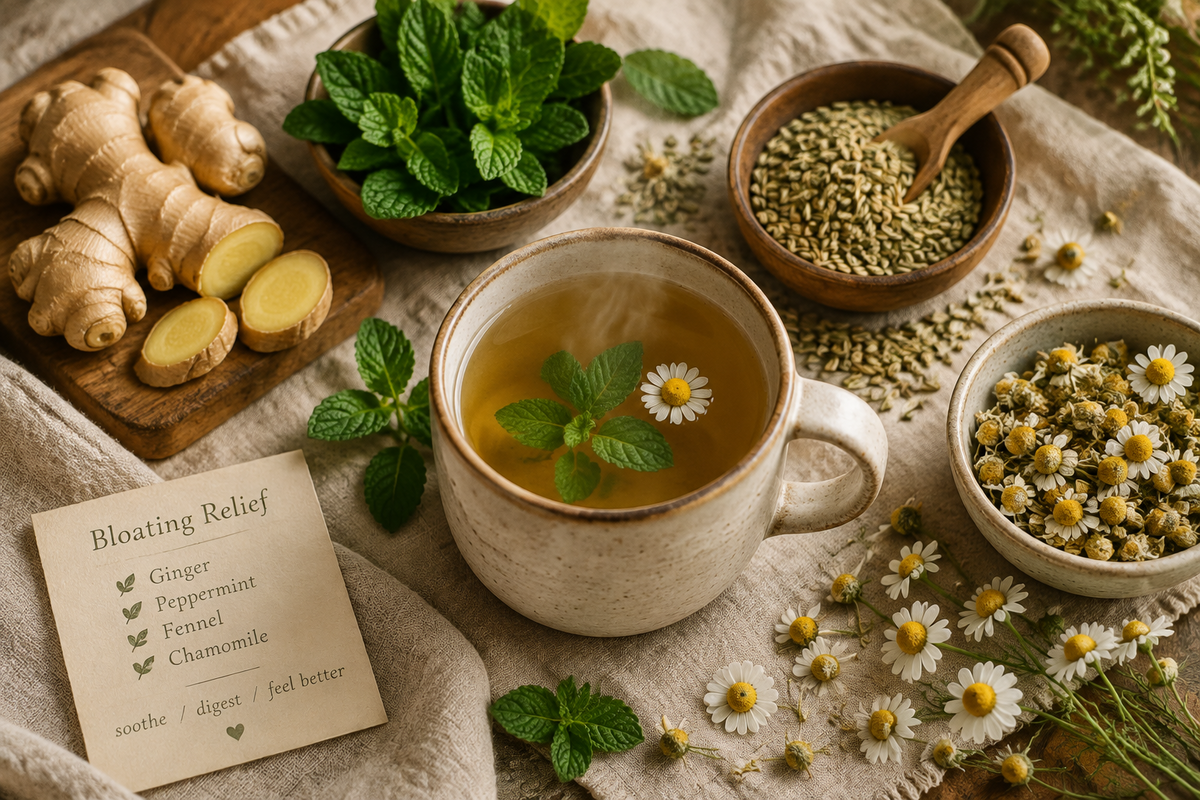
The best tea for bloating is peppermint tea, because the menthol in peppermint leaves helps relax the smooth muscle of your gut wall. That can make it easier for trapped gas to move through rather than build up, leaving your stomach feeling tight and stretched. Fennel, ginger, and chamomile can help too, but peppermint has the strongest human research behind it for the gassy, crampy bloating many people feel after a meal. If you want one cup built around exactly that kind of support, Belly Balance pairs peppermint with a naturally caffeine-free rooibos base, so you can sip it any time of day.
Why you bloat in the first place
Bloating is usually one of three things happening in your gut. Gas may build up faster than your body can pass it, often from fermenting food. Gas can also become trapped because the muscles of your intestine are moving sluggishly or clenching. Or your stomach may simply be emptying slowly, leaving a meal sitting longer and creating that heavy, outward pressure. The reason peppermint keeps coming up is that it works most directly on the second problem.
Peppermint is an antispasmodic, which simply means it helps relax tense gut muscles. When those muscles loosen, trapped gas can move more freely and cramping may ease.
The teas worth reaching for
Here is how the main options compare for bloating specifically, honestly graded by how much evidence supports each:
|
Tea |
How it eases bloating |
Strength of evidence |
|
Peppermint |
Menthol relaxes the gut muscle, helping trapped gas move and easing cramps |
Strongest. Several human reviews, mostly of peppermint oil |
|
Fennel |
Carminative seeds help the body expel gas and may mildly relax the gut muscle |
Moderate. Long traditional use, smaller studies |
|
Ginger |
Helps speed stomach emptying, so food lingers and presses less |
Moderate. Studied for motility and nausea |
|
Chamomile |
Helps calm gut muscle and the gut-brain stress link that can worsen bloating |
Traditional use, limited trials |
Peppermint, in detail
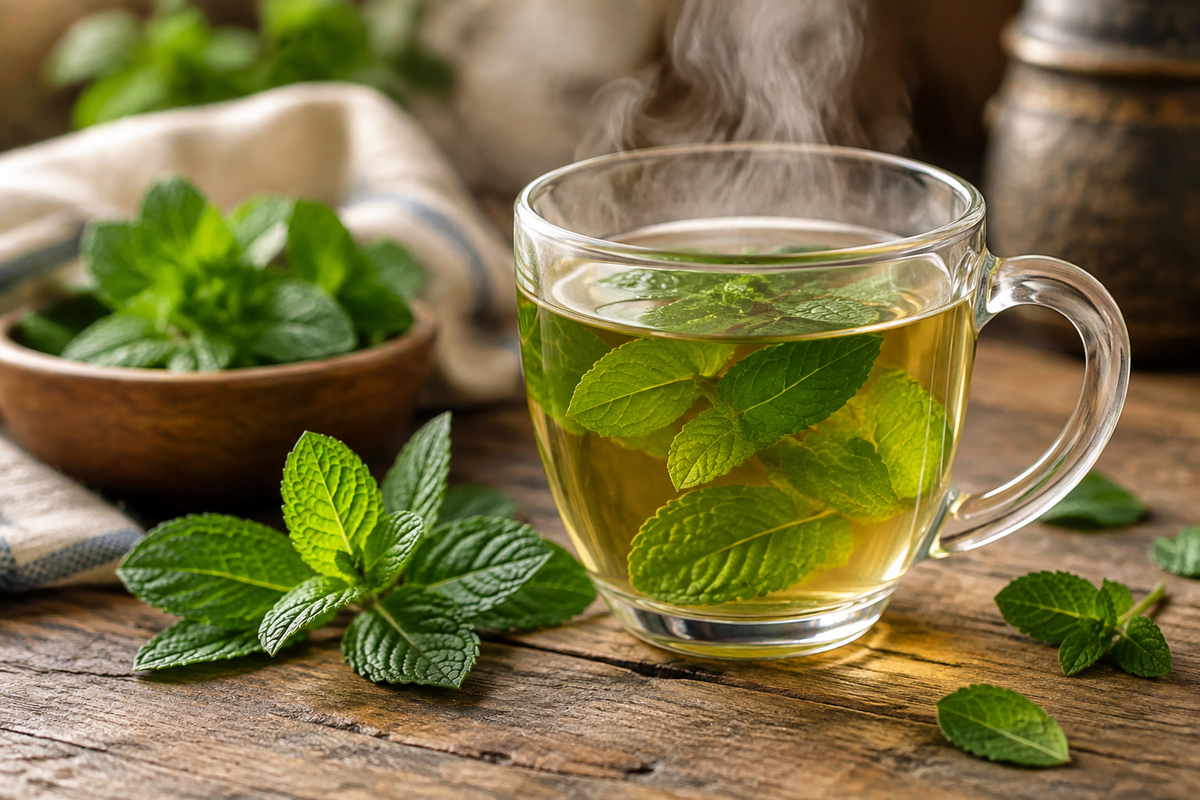
Peppermint leaves are rich in two essential oils, menthol and menthone, as well as the antioxidant rosmarinic acid. Menthol is the active ingredient worth understanding. It helps relax the smooth muscle lining your digestive tract, which may reduce the spasm and trapped gas that leave you feeling bloated and crampy. This is where peppermint has real research to back it up. In people with irritable bowel syndrome, where bloating, gas, and cramping are common symptoms, peppermint has been studied in several reviews and has consistently performed better than placebo in easing digestive discomfort. There is one important caveat. Peppermint tea is gentler and has been studied less directly. It contains the same menthol and uses the same muscle-relaxing mechanism, so it is a reasonable, food-safe way to achieve a lighter version of that effect. It is simply not the same dose as a clinical peppermint oil capsule, and it is better to be clear about that than overstate what a cup of tea can do.
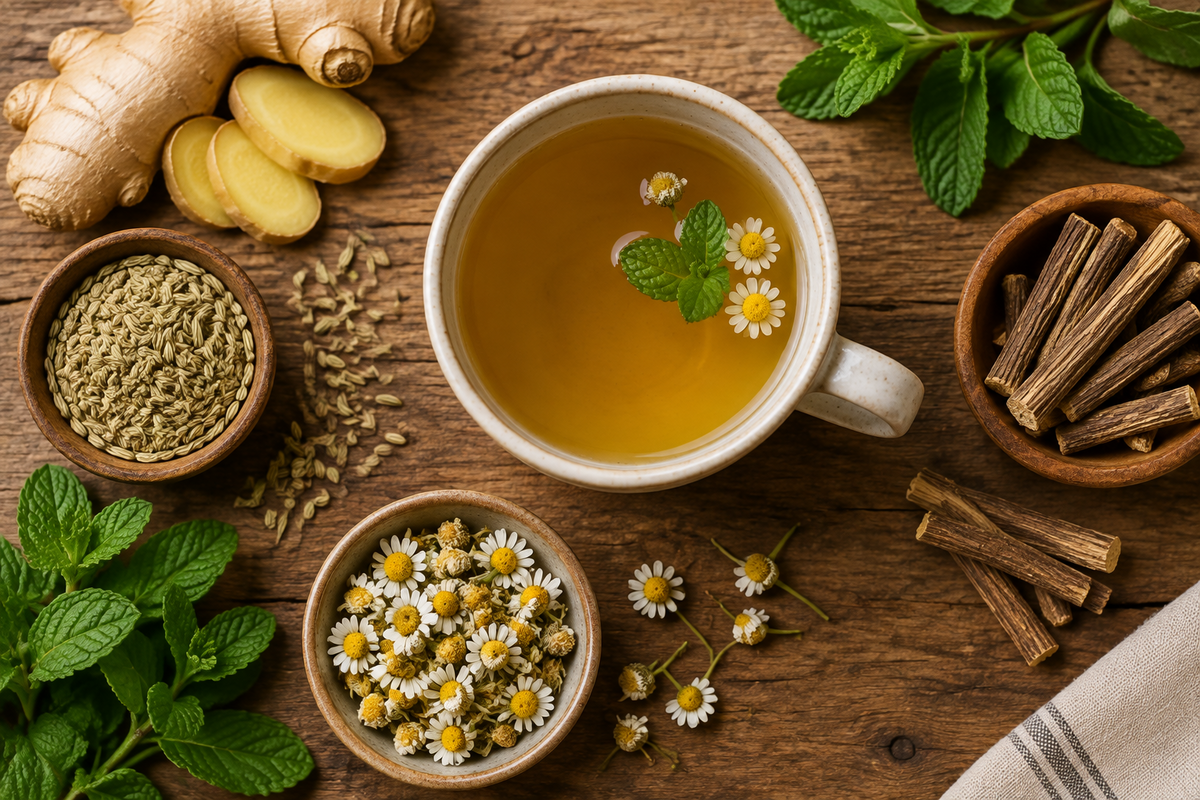
Ginger, fennel, and chamomile
Ginger helps with a slightly different kind of bloating: the heavy, full feeling that can happen when your stomach empties slowly. It helps move digestion along and is also well studied for nausea. If your bloating comes with a sluggish, overly full, or queasy stomach, ginger may be the smarter pick. Avodah Pure Detox is a daytime tea because it does contain caffeine.
Fennel seeds are a classic carminative, meaning they help the body pass gas rather than hold onto it. Avodah does not currently blend fennel, but a few crushed fennel seeds steeped alongside your tea are a traditional option.
Chamomile takes a gentler route. It can help calm both the gut muscle and the stress response that sometimes tightens digestion in the first place. That makes chamomile particularly suited to evenings, which is why it lives in the Sleep Restore. You can read the full evidence on the peppermint leaves library page.
When peppermint is not your friend
If you get acid reflux or heartburn, be careful with peppermint. The same menthol that relaxes the muscles of the digestive tract can also relax the valve at the top of your stomach that helps keep stomach acid down. For many people, that is not a problem. But if you are prone to reflux, peppermint can sometimes worsen symptoms. In that case, ginger or fennel may be a better choice. If you are pregnant, taking medication, or managing an ongoing digestive condition, it is worth checking with your healthcare provider before making any herbal tea a regular part of your routine.
How to use it
For meal-related bloating, sip a cup after eating, when gas and pressure tend to build. Steep peppermint for about five to seven minutes with near-boiling water so the menthol-rich oils have time to release. There is no need to turn it into a complicated routine. One warm cup is enough. And that after-meal cup can be useful for more than digestion.
It is five quiet minutes that belong to you. A small Avodah Moment to sit down, sip slowly, and let both your stomach and your day settle.
The easy pick: Belly Balance
Belly Balance is built around peppermint leaves, traditionally used to ease bloating and gas, and is based on naturally caffeine-free rooibos, which is gentle and easy to drink. Calendula adds a soft, soothing note, a little cacao gives it a smooth cocoa-mint finish, and stevia leaf lends a light natural sweetness without added sugar. Because rooibos contains no caffeine, you can drink Belly Balance after lunch, after dinner, or whenever bloating tends to catch up with you. It also makes an easy evening Avodah Moment: something warm, simple, and yours at the end of a full day. If you want to make digestive tea part of your everyday rhythm, the Gut Reset bundle pairs Belly Balance with Avodah's other digestion teas, so you have the right cup for whatever discomfort shows up.
Frequently asked questions
What is the best tea for bloating?
Peppermint tea is the strongest overall choice for gassy, crampy bloating. Its menthol helps relax gut muscle so trapped gas can move more freely, and it has more human research behind it than most other herbal teas used for bloating.
Does peppermint tea actually reduce bloating?
It can help with the gassy, crampy kind. The strongest studies used concentrated peppermint oil capsules in people with IBS, where peppermint helped reduce bloating and pain. Tea is a gentler source of the same menthol, so expect a lighter effect.
How quickly does tea help with bloating?
Relief varies from person to person. For gas and cramping, some people may notice improvement within 30 to 60 minutes as the gut relaxes and gas begins to move. It is not instant, and warm tea tends to work best as part of a relaxed after-meal routine.
Can I drink peppermint tea every day for bloating?
For most people, yes. Peppermint tea is naturally caffeine-free and generally well-tolerated. The main exception is if you have acid reflux or heartburn, since peppermint can worsen those symptoms in some people.
Peppermint or ginger tea for bloating?
Choose peppermint for gassy, crampy bloating. Choose ginger if your bloating comes with a slow, heavy, or queasy stomach, or if you have reflux and want to avoid peppermint.
What tea helps with bloating and gas together?
Peppermint is the strongest single choice. Fennel is also useful because it is a carminative, meaning it helps the body pass gas rather than hold onto it.
What tea helps with gas and stomach discomfort?
Peppermint works well when the discomfort comes from trapped gas and cramping. If the discomfort feels more like heaviness, fullness, or nausea, ginger may be the better fit.


Leave a comment
This site is protected by hCaptcha and the hCaptcha Privacy Policy and Terms of Service apply.