

Tea for Digestion: The Complete Guide
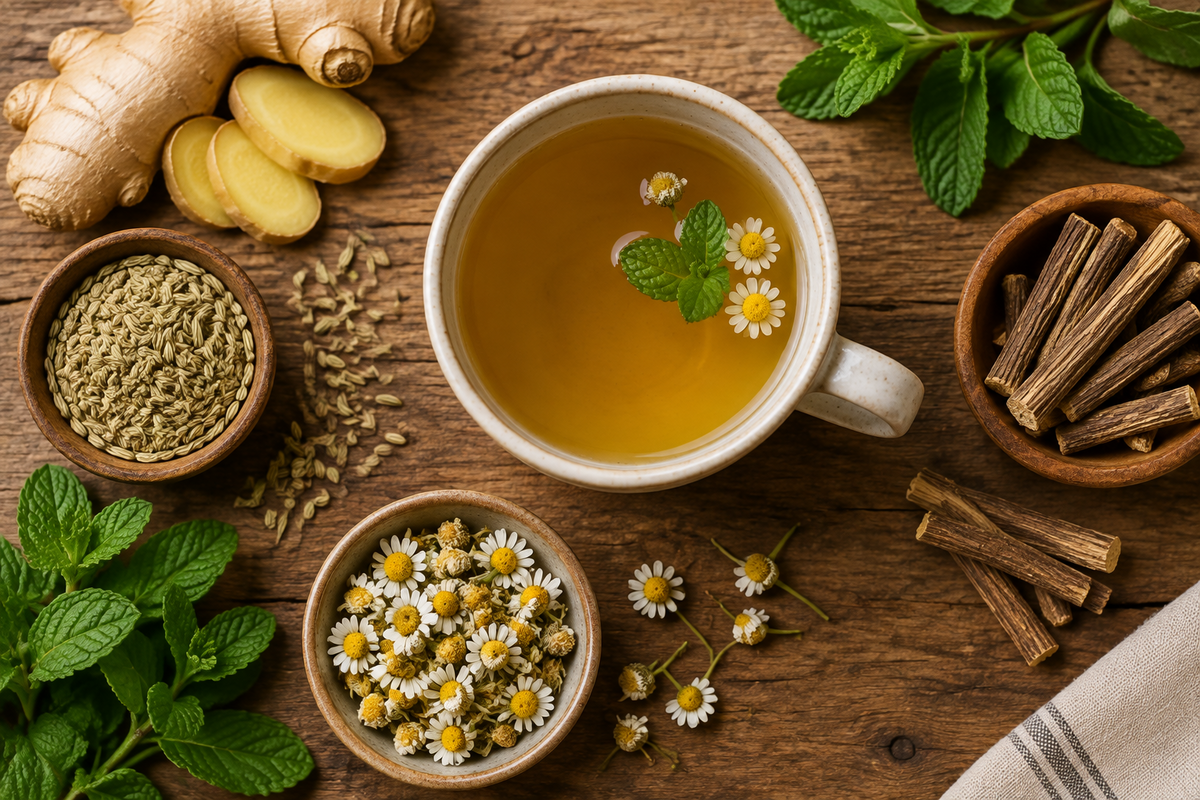
The best tea for digestion depends on what is bothering you: peppermint for bloating and gas; ginger for nausea and a heavy stomach; a soothing, caffeine-free tea for acid reflux; and warm fluids for sluggish digestion. No single tea fixes everything, but matched to the right problem, the right cup can offer gentle relief. This guide maps each one so you can go straight to what you need.
How tea helps digestion
Most digestive teas work in one of three ways, and knowing which is which makes choosing simple.
Some relax gut muscles. Your digestive tract is lined with muscle that squeezes to move food and gas along. When it clenches, you can feel cramps and trapped gas. Peppermint is the classic muscle-relaxer, or antispasmodic, which is why it suits bloating.
Some speed things up. A stomach that empties slowly leaves food sitting and pressing, which can feel heavy and make you feel queasy. Ginger helps speed stomach emptying, which is why it helps with nausea and a sluggish stomach.
Some soothe and calm. Chamomile helps calm both the gut and the stress response that can tighten it, which is why it suits a stomach knotted by nerves. And underneath all of them, warmth and fluid help on their own. Sometimes part of what makes a warm cup feel so settling is simply the chance to slow down, sip, and give your body a moment.
Tea for bloating and gas
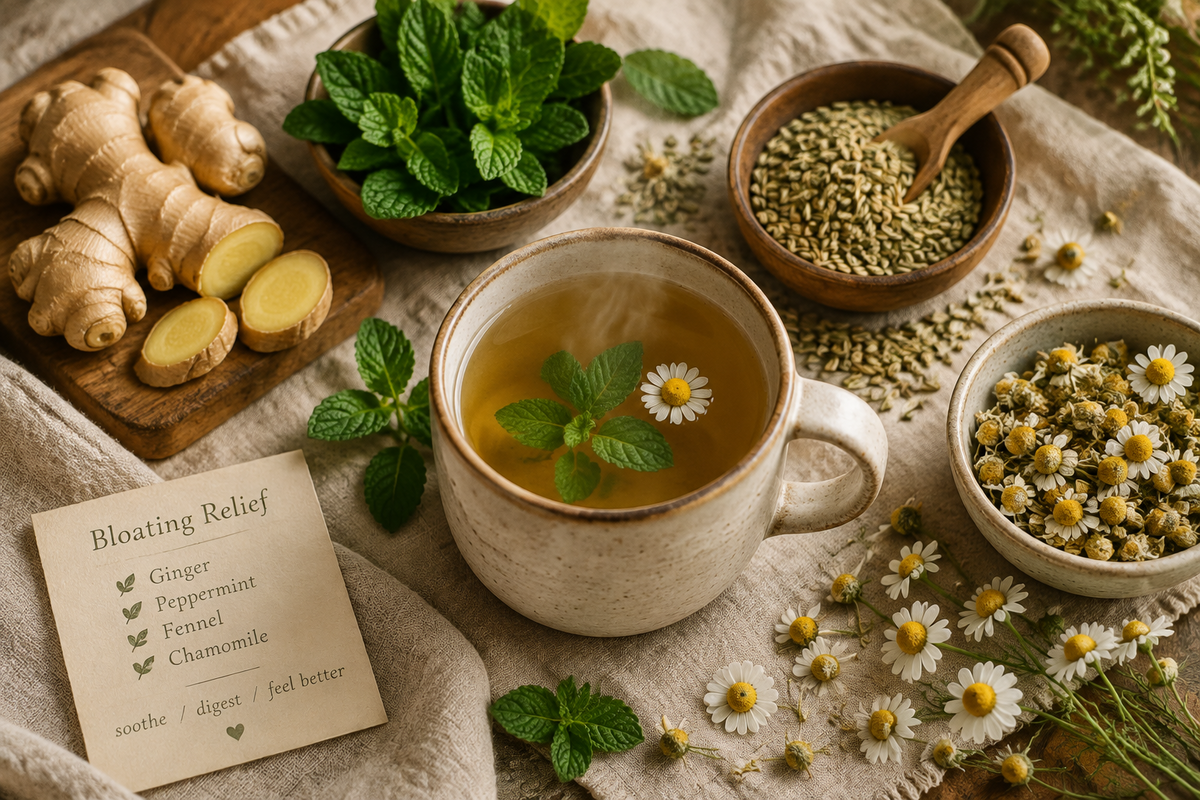
Bloating is often linked to gas trapped behind a tense or slow-moving gut. Peppermint is one of the best-studied choices because its menthol helps relax the gut wall, allowing trapped gas to pass more easily. Ginger and fennel can help too, in their own ways. For the full comparison, see our guide to the best tea for bloating, and for the science on peppermint specifically, see peppermint tea for bloating, gas, and cramps.
Avodah's Belly Balance is built around peppermint and is caffeine-free, making it an easy choice for a quiet after-meal Avodah Moment.
Tea for nausea and an upset stomach
For nausea, queasiness, or a heavy stomach, ginger is the pick, since it helps speed stomach emptying and calm the nausea signal. For a crampy, gassy upset stomach, peppermint may be better, and for a stomach unsettled by stress, chamomile is a gentler option. Our guide to the best tea for an upset stomach and nausea walks through which to choose, and ginger tea for digestion and nausea covers ginger in depth.
Avodah's Pure Detox contains ginger and, because it's on a tea base, it contains caffeine, so keep it to daytime.
Tea for acid reflux
Reflux is the one area where some popular soothing teas can backfire. Peppermint relaxes the valve that helps keep stomach acid down, and caffeinated teas may aggravate symptoms for some people, so both are worth approaching carefully.
Gentler, caffeine-free options like chamomile may suit reflux better, although habits around meals, timing, and portion size often matter more than any cup of tea.
Read tea for acid reflux: what helps and what to avoid before reaching for peppermint or a caffeinated blend.
Tea for constipation
The teas that reliably stimulate a bowel movement usually contain senna, a stimulant laxative intended for occasional use rather than an everyday digestive tea. Gentler support comes from warm fluids, hydration, movement, fiber, and possibly a mild ginger cup as part of that routine. Our honest guide to tea for constipation explains the difference and what may work better than tea alone.
A note on caffeine
This matters for digestion. Among Avodah's digestion teas, Belly Balance is caffeine-free, so it suits any time of day, including after dinner. Pure Detox contains caffeine because it is built on a black and green tea base, so it is better suited to daytime. If you are reflux-prone or sensitive to caffeine, favor the caffeine-free option.
Building a simple daily rhythm
You do not need a cabinet full of teas. A gentle rhythm might be a warming cup during the day when digestion feels slow, and a soothing, caffeine-free cup after dinner when bloating or cramps tend to build. The Gut Reset bundle brings Avodah's digestion teas together so you have an option for different moments. That after-dinner cup can also be more than something you drink for digestion. It can be a small pause woven into a full day, an Avodah Moment to sit down, wrap your hands around something warm, and turn a few quiet minutes back toward yourself.
You spend much of the day moving, doing, carrying, and caring. Sometimes the smallest act of care is simply giving yourself a moment to settle, and letting your digestion settle with you.
Frequently asked questions
What is the best tea for digestion?
There is no single best tea for digestion. Peppermint suits bloating and gas, ginger suits nausea and a heavy stomach, chamomile can suit a stressed stomach, and caffeine-free options are generally better for reflux. Match the tea to what is bothering you.
Do digestive teas actually work?
Some have better evidence than others. Peppermint is well studied for its muscle-relaxing effects on the digestive tract, while ginger has research supporting its role in nausea and stomach emptying. Tea is generally a gentler dose than the concentrated extracts or capsules often used in studies.
Which Avodah teas are caffeine-free?
Belly Balance, the peppermint blend, is caffeine-free. Pure Detox contains caffeine from its black and green tea base, so it is better suited for daytime use.
Can I drink digestive tea every day?
Many caffeine-free herbal teas can fit into a daily routine. Keep caffeinated blends to times that suit your caffeine tolerance, and avoid relying on senna-based laxative teas every day.
When should I see a doctor about digestion?
If symptoms are severe or persistent, or come with significant pain, blood, repeated vomiting, difficulty swallowing, or unexplained weight loss, speak with a healthcare professional. Tea is better suited to everyday, passing digestive discomfort.
References
• Wu KL et al. Effects of ginger on gastric emptying and motility in healthy humans. European Journal of Gastroenterology and Hepatology, 2008.
https://pubmed.ncbi.nlm.nih.gov/18403946/
• Viljoen E et al. A systematic review and meta-analysis of the effect and safety of ginger in the treatment of pregnancy-associated nausea and vomiting. Nutrition Journal, 2014.
https://pubmed.ncbi.nlm.nih.gov/24642205/



Leave a comment
This site is protected by hCaptcha and the hCaptcha Privacy Policy and Terms of Service apply.