
Tea for Acid Reflux: What Helps and What to Avoid
No tea cures acid reflux, and some popular teas can actually make it worse.
The honest short answer is that the best teas for reflux tend to be caffeine-free and peppermint-free. Chamomile is one of the gentlest choices, while modest amounts of plain ginger may suit some people. Peppermint and caffeinated teas such as black tea, green tea, and matcha are more likely to aggravate reflux.
With reflux, knowing what to avoid can matter just as much as knowing what to reach for.
Why reflux happens
At the top of your stomach sits a ring of muscle called the lower esophageal sphincter, or LES. Its job is to stay closed and help keep stomach acid where it belongs. Acid reflux and heartburn happen when that valve relaxes at the wrong time and stomach contents move back up into the esophagus. That one mechanism explains why certain teas can be troublesome: anything that relaxes the LES may make reflux easier to trigger.
Teas to avoid if you have reflux
This is the counterintuitive part, so it deserves to come first. Two of the teas people often reach for when their stomach feels unsettled may be poor choices when the actual problem is reflux.
Peppermint and spearmint
The menthol that makes peppermint useful for bloating works partly by relaxing smooth muscle. Unfortunately, that relaxing effect does not stop at the intestines. Peppermint can also relax the LES, the valve you need to stay closed to help keep stomach acid down.That is why we would steer you away from a peppermint tea such as Belly Balance when reflux or heartburn is your main issue, even though peppermint can be very useful for other types of digestive discomfort.
Caffeinated teas: black, green, and matcha
Caffeine can aggravate reflux in some people, which is why black tea, green tea, matcha, and other caffeinated drinks often appear on reflux trigger lists.
Pure Detox can be a useful daytime digestion tea for other concerns, but reflux is not the moment for it.
Teas that may soothe
Chamomile
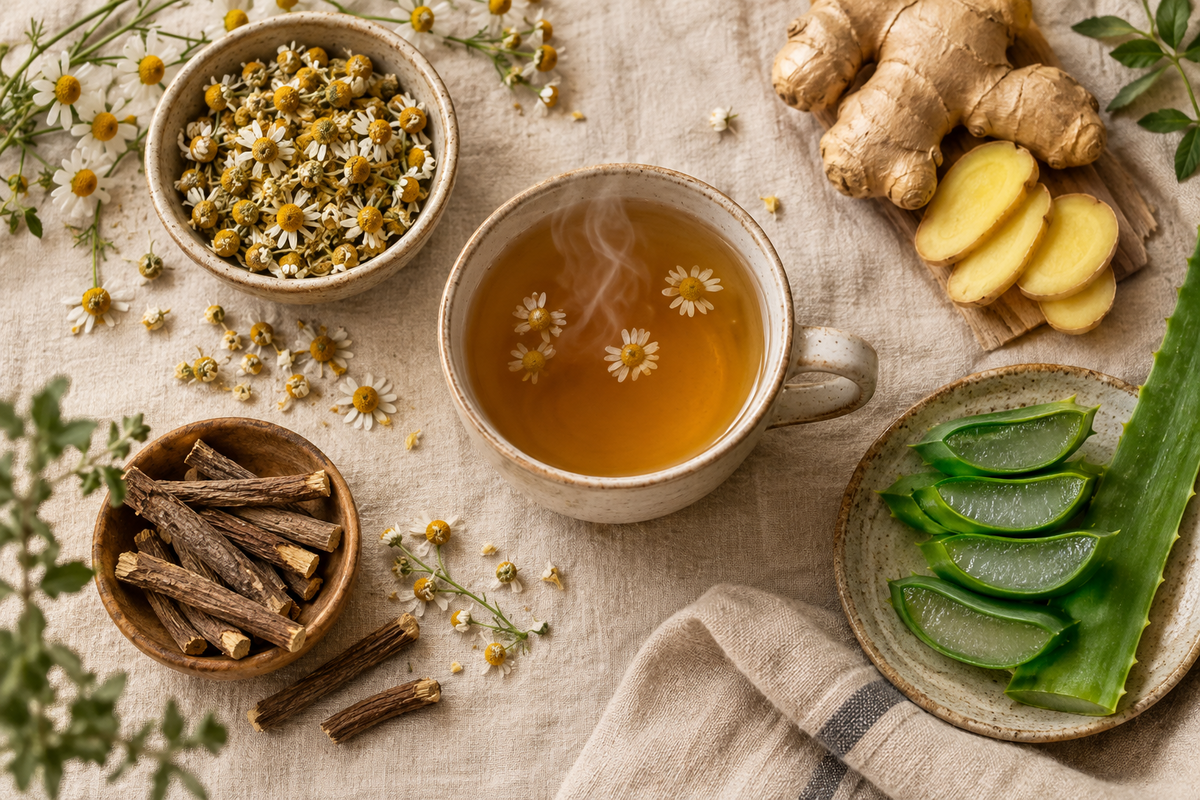
Chamomile is caffeine-free and traditionally used as a gentle, calming tea for an irritated or stress-sensitive stomach. It will not repair the LES or treat the underlying cause of reflux, but it offers a mild, soothing cup that many people find easier to tolerate than peppermint or caffeinated tea. It also has the advantage of fitting naturally into the evening, when caffeine may be the last thing you want anyway.
Ginger, in modest amounts
Ginger is more complicated, so it is worth being honest about it.
In modest amounts, ginger may help some people by supporting stomach emptying. A stomach that empties more efficiently may have less volume sitting there ready to reflux . But stronger or very concentrated ginger can feel irritating for some people with reflux.
If you want to try it, keep the brew gentle, choose plain caffeine-free ginger tea, and pay attention to how your own stomach responds. If it burns or makes symptoms worse, it is not the right cup for you.
Licorice, with a caution
Licorice has a long history of traditional use for digestive comfort. A form called deglycyrrhizinated licorice, or DGL, is used specifically because much of the glycyrrhizin has been removed. Regular licorice root is different. It contains compounds that can raise blood pressure and interact with certain medications, and it is not generally recommended during pregnancy. So licorice tea is one to approach thoughtfully rather than casually, especially if you have high blood pressure or take medication.
Marshmallow root and slippery elm
Marshmallow root and slippery elm are known as demulcents, meaning they form a soft, gel-like texture when prepared. Traditionally, they have been used for their soothing effect on irritated tissues. We do not currently blend either of them, but they are gentle options worth knowing about if you are exploring caffeine-free, peppermint-free herbal teas.
What matters more than the tea
We would be doing you a disservice if we pretended tea was the main event. For reflux, everyday habits often matter more than any single cup. Smaller meals can help reduce pressure in the stomach. Avoiding lying down for two to three hours after eating can make it harder for acid to travel upward. And paying attention to your own trigger foods can be more useful than following a generic list, because reflux triggers vary from person to person. Think of a gentle, caffeine-free tea as something that supports those habits rather than replaces them.
Sometimes your Avodah Moment may simply be choosing a quieter cup after dinner, staying upright for a while, and giving your body time to settle.
An honest word on Avodah teas
We would rather point you toward the right choice than sell you the wrong one.
Avodah's peppermint tea, Belly Balance, and its caffeinated ginger tea, Pure Detox, are both useful for other digestive concerns, but neither is the obvious choice when reflux is your main issue.
If you want an Avodah cup while managing reflux, look for something that is both caffeine-free and peppermint-free, keep it gentle, and pair it with the habits above.
Sometimes good wellness advice means knowing when a product is not the answer.
When to see a doctor
Occasional reflux is common, but frequent reflux that wakes you during the night or persists despite changes to meals and habits deserves medical attention. Ongoing acid exposure can irritate and damage the esophagus over time. Speak with a healthcare professional promptly if you have difficulty swallowing, pain when swallowing, repeated vomiting, black or bloody stools, or unexplained weight loss. Tea can be comforting, but persistent reflux needs proper care.
Frequently asked questions
What tea is good for acid reflux?
Caffeine-free, peppermint-free teas are generally the safest place to start. Chamomile is one of the gentlest choices, while weak, plain ginger tea may suit some people. Peppermint and caffeinated teas are more likely to aggravate reflux.
Is ginger tea good for acid reflux?
It depends. Small amounts of plain ginger tea may suit some people because ginger supports stomach emptying, but strong ginger can feel irritating. Keep it gentle, choose a caffeine-free ginger tea, and stop if it worsens your symptoms.
Is peppermint tea bad for acid reflux?
It can be. Peppermint's menthol relaxes smooth muscle, including the lower esophageal sphincter, which can make it easier for stomach acid to move upward. If reflux is your main problem, peppermint may not be the best choice.
Does chamomile tea help acid reflux?
Chamomile is caffeine-free and traditionally used as a gentle, soothing tea for an irritated or stress-sensitive stomach. It does not treat the underlying cause of reflux, but many people find it easier to tolerate than peppermint or caffeinated tea.
Can green tea cause acid reflux?
Green tea contains caffeine, which can aggravate reflux in some people. If you notice that green tea triggers heartburn or acid reflux, a caffeine-free herbal tea may be a better fit.




Leave a comment
This site is protected by hCaptcha and the hCaptcha Privacy Policy and Terms of Service apply.