

Tea for Constipation: An Honest Guide to What Works
The teas most likely to directly stimulate a bowel movement are senna teas, and senna is a stimulant laxative rather than an everyday wellness drink. For gentler, regular support, warm fluids, good hydration, fiber, and movement generally matter far more. Ginger may support digestion higher up in the digestive tract, but no tea is a cure for ongoing constipation. This guide is honest about the difference, because reaching for a stronger tea is not always the same thing as helping your gut.
What constipation actually is
Constipation usually means stool moves through the colon more slowly than usual or becomes harder and more difficult to pass. Several things can contribute, but two very common factors are not getting enough fibre and not drinking enough fluid.
That is worth remembering because it explains why your overall routine usually matters more than any particular tea. A cup can support that routine. It should not have to carry the whole job.
The senna truth
If you have bought a "detox," "cleanse," or "smooth move" style tea designed to make you go, there is a good chance it contained senna. Senna is a genuine stimulant laxative. It contains compounds called sennosides that stimulate the bowel and encourage contractions, often producing a bowel movement within about six to twelve hours.
Here is the important part: senna works because it is a laxative, not because it is simply a digestive herbal tea.
It can cause cramping and diarrhea, particularly if too much is used, and it should be taken according to the product directions or advice from a healthcare professional. If you find yourself needing laxatives frequently, the better question is why the constipation keeps returning.
Gentler teas and the warm-drink effect
If you are looking for everyday support rather than a forceful push, gentler options make more sense.
A warm drink itself can help
Sometimes the cup matters almost as much as what is inside it. Eating and drinking in the morning can stimulate the body's natural gastrocolic reflex, which encourages the colon to move after food or fluid enters the stomach. A warm drink can become an easy part of that morning rhythm, especially when it also helps you stay hydrated.
Ginger
Ginger supports movement higher up in the digestive tract by helping the stomach empty more efficiently. That does not make ginger a proven treatment for constipation in the colon. But if your digestion also feels heavy or sluggish, a gentle ginger tea can still fit naturally into a broader routine built around fluids, fiber, and movement.
Hydration is the quiet hero
Fluid helps keep stool softer and easier to pass, especially when you are also getting enough fiber. That means caffeine-free herbal tea can contribute to your daily fluid intake just as water does. And while caffeinated tea can make some people urinate a little more, normal amounts still contribute to hydration. The bigger reason to choose caffeine-free tea here is simply that it gives you an easy option you can drink throughout the day without worrying about your caffeine intake.
What works better than tea
We would be misleading you if we sold tea as the answer to constipation.
For everyday regularity, a few basic habits do most of the work:
Eat enough fiber. Fruit, vegetables, beans, whole grains, nuts, and seeds all help add bulk and softness to stool.
Drink enough fluid. Fiber works better when there is enough fluid available to keep stool soft.
Move your body. Regular physical activity can support healthy bowel movement.
Give yourself time. Ignoring the urge to go or constantly rushing through mornings can make regularity harder for some people. Tea fits alongside those habits.
A warm, caffeine-free cup in the morning can become its own small Avodah Moment — a few quiet minutes to hydrate, slow down, and give your body time to wake up too.
An honest word on Avodah teas
What a gentle Avodah cup can do is add warmth and fluid to a routine already built around fiber, water, and movement.
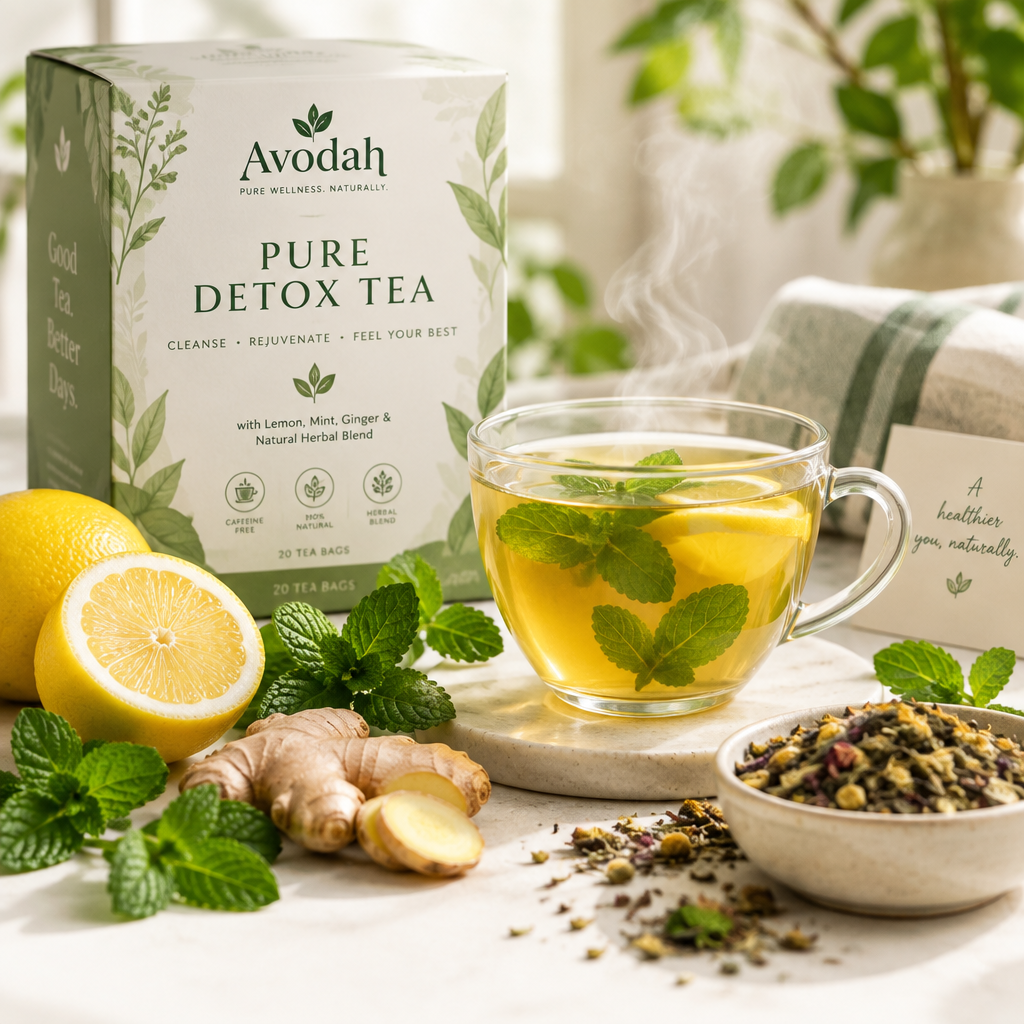
If your digestion also feels sluggish or heavy higher up, ginger may be useful for that part of the picture. Avodah's Pure Detox contains ginger, although because it is built on a black and green tea base, it also contains caffeine and is best suited to daytime.
The goal here is not to force your body into doing something.
It is to support a healthier rhythm — and sometimes the simplest habits are the ones your gut responds to best.
When to see a doctor
Constipation is common, but new or persistent changes in your bowel habits deserve attention.
Speak with a healthcare professional if constipation continues despite changes to fiber, fluid, and movement, or if it comes with significant abdominal pain, blood in the stool, vomiting, unexplained weight loss, or another concerning change.
The same applies if you find yourself regularly relying on stimulant laxatives to have a bowel movement.
Those are signs worth investigating rather than simply reaching for a stronger tea.
Frequently asked questions
What tea makes you poop?
Senna teas can directly stimulate a bowel movement because senna is a stimulant laxative. They should be used according to the product directions rather than treated like an everyday wellness tea.
Is there a gentle tea for constipation?
A warm caffeine-free tea can support hydration and may fit into the body's natural morning bowel rhythm, but it will not work like a stimulant laxative. For everyday regularity, fibre, fluids, and movement matter more.
Does ginger tea help with constipation?
Ginger supports stomach emptying and movement in the upper digestive tract, but it is not a proven treatment for constipation in the colon. It can still be part of a warm, hydrating digestive routine.
How much tea should I drink for constipation?
There is no magic number of cups. Think about your overall fluid intake instead. Water and caffeine-free tea can both contribute to hydration, which is particularly helpful when you are also eating enough fibre.
When should I see a doctor about constipation?
Speak with a healthcare professional if constipation is new or persistent, or comes with significant pain, blood in the stool, vomiting, unexplained weight loss, or frequent reliance on stimulant laxatives.


Leave a comment
This site is protected by hCaptcha and the hCaptcha Privacy Policy and Terms of Service apply.