Black Cohosh Tea: Benefits, Side Effects and Safety
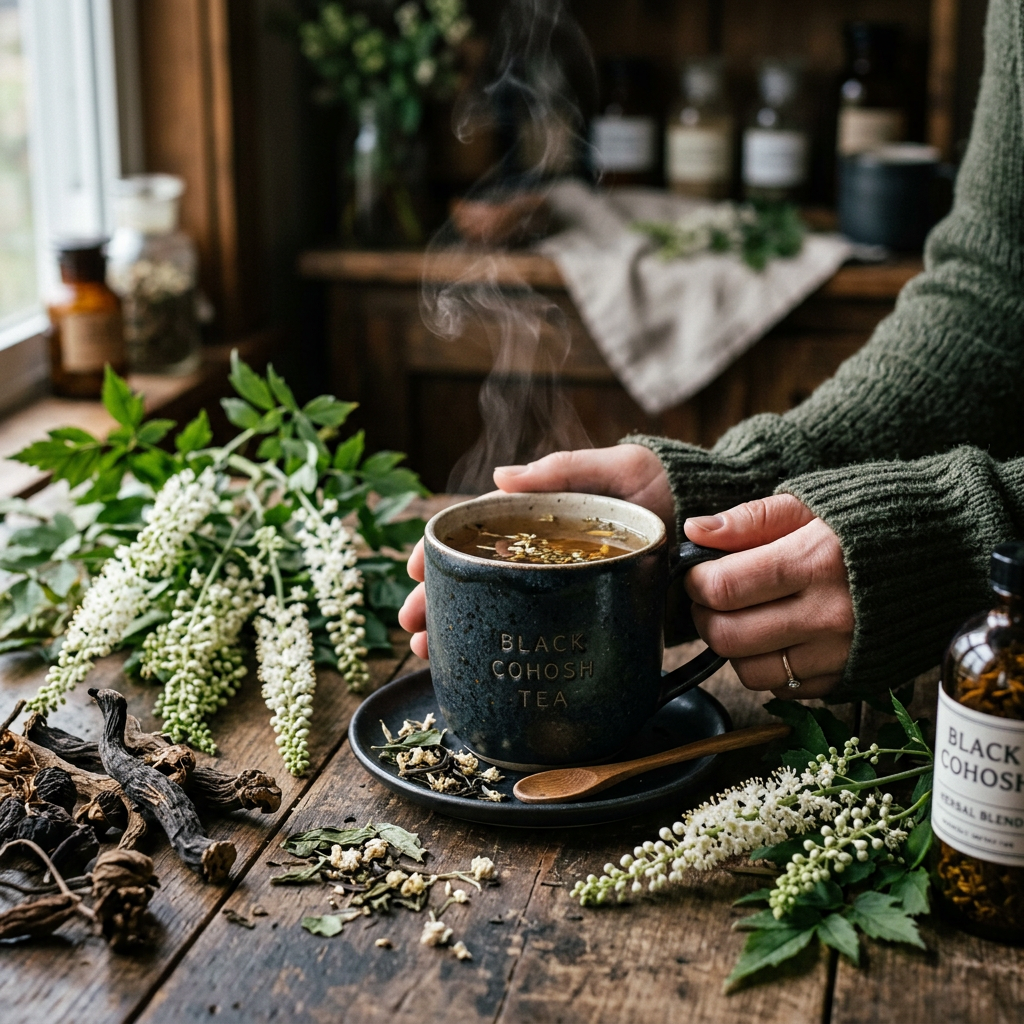
Black cohosh (Actaea racemosa) is the most widely used herb for menopause in North America, used for hot flashes, night sweats, and mood. A meta-analysis of clinical trials found that black cohosh preparations reduced menopausal symptoms by 26%. [1] Its active compounds are triterpene glycosides, such as actein and 23-epi-26-deoxyactein, along with phenolic acids. [2]
Indigenous peoples of eastern North America used black cohosh root for women's health long before it reached European herbal medicine. Today it is one of the most studied menopause herbs in the world.
Black Cohosh Benefits for Women
1. Fewer Hot Flashes and Night Sweats
In a meta-analysis of clinical trials, black cohosh preparations reduced menopausal symptoms, including vasomotor symptoms (hot flashes and night sweats), by 26%. [1]
2. Supports Mood and Sleep in Menopause
Black cohosh is used for the irritability, low mood and broken sleep that often travel with hot flashes. [2]
3. A Long Traditional Record
Black cohosh has more than a century of documented use for women's health in North American and European herbal medicine. [2]
Does Black Cohosh Increase Estrogen?
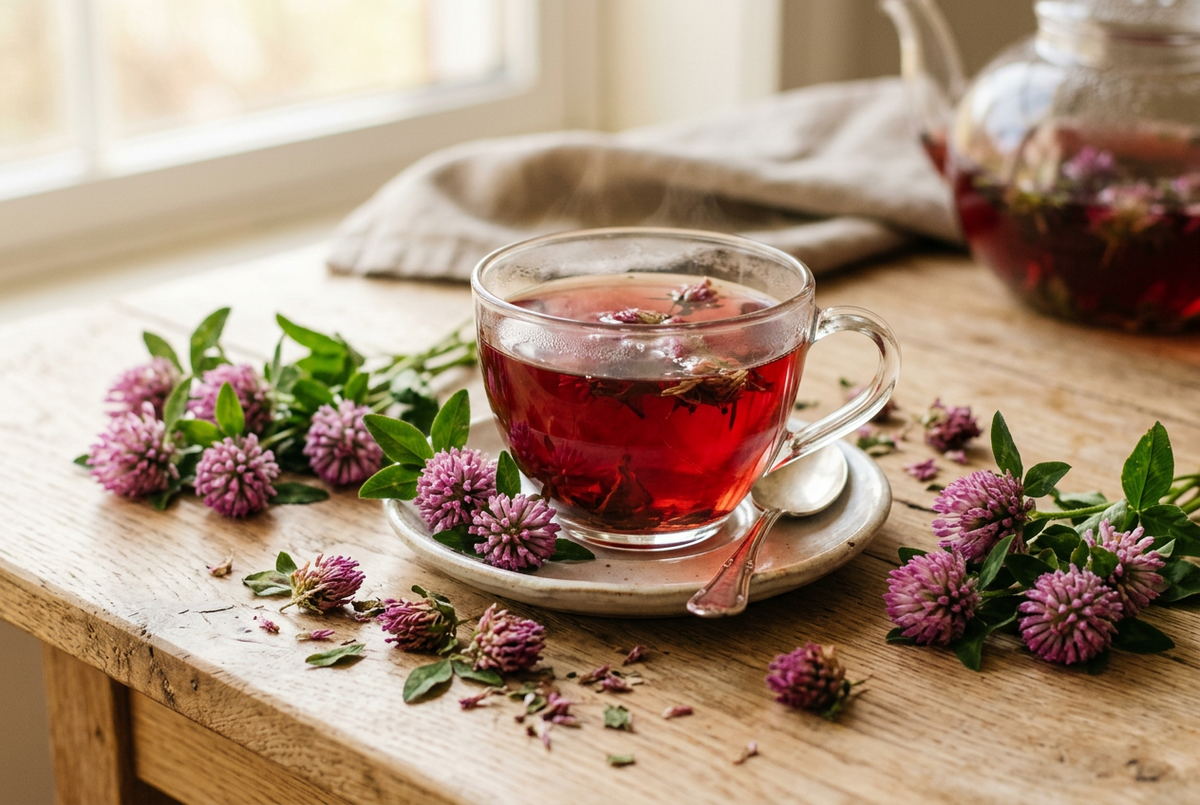
Current research suggests black cohosh does not act like estrogen in the body. Rather than raising estrogen, it is thought to work through the brain's serotonin and other signaling pathways involved in temperature control and mood. [2] That makes it different from red clover, whose isoflavones gently echo estrogen. Many menopause teas, including ours, combine the two.
Black Cohosh Side Effects
Most women tolerate black cohosh well at recommended amounts. Reported side effects include:
- stomach upset or indigestion
- headache
- dizziness
- rash
- weight changes
Liver warning: rare cases of liver injury have been reported in people taking black cohosh products. Health Canada requires black cohosh products to carry a liver warning. [3] Stop using it and see a doctor if you notice dark urine, yellowing of the skin or eyes, unusual tiredness, nausea, or abdominal pain.
Who Should Avoid Black Cohosh?
- Pregnant or breastfeeding women.
- People with liver disease or a history of liver problems.
- Women with hormone-sensitive conditions, including a history of breast cancer, unless your oncologist approves.
- Anyone taking hormone therapy, tamoxifen or medications processed by the liver, without their doctor's advice.
How to Take Black Cohosh
Black cohosh is a root, so it needs simmering or a long steep. As a single herb tea, it is strongly bitter, which is why most people enjoy it in a blend.
Ruby Radiance blends black cohosh with red clover, licorice root, ginkgo, eleuthero, and cinnamon bark into one caffeine-free menopause tea, warm, lightly spiced, and naturally sweetened with stevia. Steep 1 teaspoon in just-boiled water, covered, for 5 to 7 minutes.
How long: most women in the studies used black cohosh for weeks to a few months. Speak with your doctor about longer use.
Black Cohosh vs Red Clover
|
|
Black cohosh |
Red clover |
|
Part used |
Root |
Flower |
|
Key compounds |
Triterpene glycosides |
Isoflavones |
|
Estrogen-like? |
Not thought to be |
Gently, as a phytoestrogen |
|
Research |
26% symptom reduction in a meta-analysis [1] |
Reduced hot flash frequency in a meta-analysis [4] |
More in Red Clover Tea.
The Avodah Moment: Care With Wisdom
Avodah means devotion and service. Caring for yourself well in menopause means using powerful herbs wisely: knowing what they do, and what to watch for.
Make your cup an informed ritual. Read the label, check with your doctor if you need to, then brew it, let it cool to warm and sit with it. Care and wisdom belong together.
You cannot pour from an empty cup. This is where you fill yours.
Shop Ruby Radiance | Shop the Second Bloom Bundle
More: Tea for Menopause | Best Tea for Hot Flashes and Night Sweats
Frequently Asked Questions
What is black cohosh good for?
Menopause symptoms, especially hot flashes and night sweats. A meta-analysis found black cohosh preparations reduced menopausal symptoms by 26%.
What are the side effects of black cohosh?
Stomach upset, headache, dizziness, and rash. Rare cases of liver injury have been reported, so stop and see a doctor if you notice signs of liver problems.
Does black cohosh increase estrogen?
Current research suggests it does not act like estrogen; it is thought to work through brain signaling pathways.
Who should not take black cohosh?
Pregnant or breastfeeding women, people with liver disease, women with hormone-sensitive conditions, and anyone on hormone therapy or tamoxifen without their doctor's advice.
How long can you take black cohosh?
Most studies used it for weeks to a few months. Speak with your doctor about longer use.
Can you drink black cohosh tea?
Yes, though alone it is very bitter. Most people enjoy it in a blend like Ruby Radiance.
Your day. Your tea. Your Avodah Moment.
References
1. Shams T, Setia MS, Hemmings R, McCusker J, Sewitch M, Ciampi A. Efficacy of black cohosh-containing preparations on menopausal symptoms: a meta-analysis. Altern Ther Health Med. 2010;16(1):36-44.
2. Mohapatra S, Iqubal A, Ansari MJ, et al. Benefits of black cohosh (Cimicifuga racemosa) for women health: an up-close and in-depth review. Pharmaceuticals (Basel). 2022;15(3):278.
3. Health Canada. Black Cohosh: product labelling and risk of liver injury. Government of Canada.
4. Ghazanfarpour M, Sadeghi R, Roudsari RL, et al. Red clover for treatment of hot flashes and menopausal symptoms: a systematic review and meta-analysis. J Obstet Gynaecol. 2016;36(3):301-311.



Leave a comment
This site is protected by hCaptcha and the hCaptcha Privacy Policy and Terms of Service apply.