

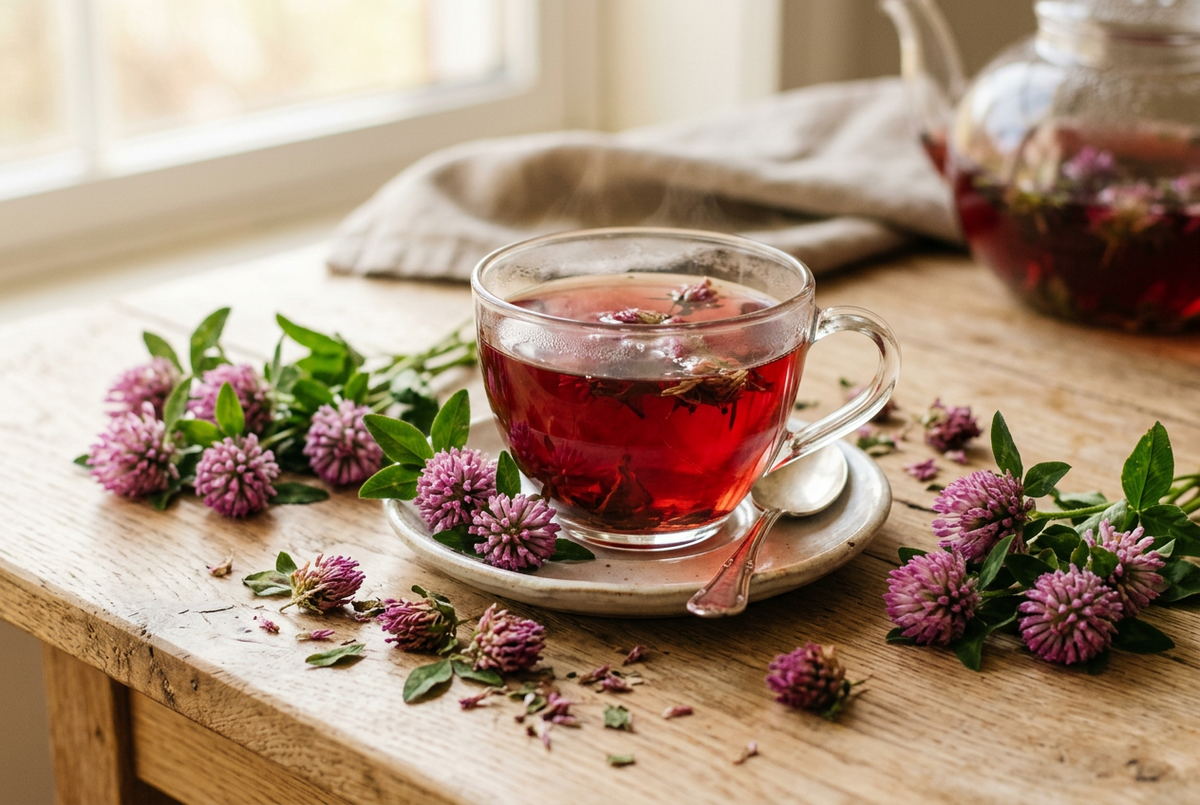
Red Clover Tea: Benefits for Menopause and How to Make It
Red clover tea is made from the pink-purple flower heads of Trifolium pratense, one of the richest plant sources of isoflavones: formononetin, biochanin A, daidzein, and genistein. These compounds gently echo estrogen's signal, which is why red clover is one of the most studied herbs for menopause. A meta-analysis found red clover reduced the frequency of hot flashes. [1]
Red clover grows wild across Europe, Asia, and North America, and its sweet, honey-scented blossoms have been brewed as a traditional women's tea for generations.
Red Clover Tea Benefits
1. Fewer Hot Flashes
The best-researched benefit. A systematic review and meta-analysis of randomized trials found red clover reduced the frequency of hot flashes compared with placebo. [1] In one randomized trial, red clover isoflavones significantly reduced daily hot flushes in postmenopausal women. [2]
2. Supports Mood in Menopause
In a randomized trial of postmenopausal women, red clover isoflavones reduced symptoms of anxiety and depression compared with placebo. [3]
3. Supports Bone Health
Estrogen helps protect bone, and bone loss speeds up after menopause. Red clover isoflavones have been studied for their role in supporting bone density in postmenopausal women. [4]
4. Rich in Antioxidants
Red clover's isoflavones and flavonoids are antioxidants that help protect cells from oxidative stress. [4]
How Red Clover Isoflavones Work
Isoflavones are phytoestrogens: plant compounds shaped enough like estrogen to bind gently to the body's estrogen receptors. They are far weaker than your own estrogen, but as your levels fall in menopause, that gentle signal may help soften the swings behind hot flashes. [4]
How to Make Red Clover Tea
- 1 to 2 teaspoons dried red clover blossoms
- 250 ml (1 cup) just-boiled water
Optional: honey, lemon, or a cinnamon stick
- Add the blossoms to an infuser.
- Pour over just-boiled water and cover the cup.
- Steep for 10 to 15 minutes. Flowers need a long steep.
- Strain and sip. It tastes mild, sweet, and slightly grassy.
The easy way: Ruby Radiance blends red clover with black cohosh, licorice root, ginkgo, eleuthero, and cinnamon bark into one caffeine-free menopause tea, lightly spiced and naturally sweetened with stevia.
How Much Red Clover Tea Should You Drink?
1 to 3 cups a day is a typical traditional amount. Give it at least four to twelve weeks; the trials that showed benefits ran for weeks to months. [1] [2]
Red Clover Tea Side Effects and Who Should Avoid It
Red clover is well tolerated by most women at tea amounts. Because it contains phytoestrogens, avoid it or speak with your doctor first if you:
- are pregnant or breastfeeding
- have a hormone-sensitive condition, including a history of breast, uterine or ovarian cancer, endometriosis or fibroids
- take hormone therapy, birth control, tamoxifen or blood thinners (red clover contains coumarins)
- have a bleeding disorder or surgery coming up
The Avodah Moment: A Flower for Your Second Bloom
Avodah means devotion and service. Red clover grows wild in meadows, blooming year after year, softer and sweeter than it looks. There is something fitting about it: a flower for women in their second bloom.
Brew a cup, cover it, and let it steep slowly. Sit somewhere quiet while it does. This season asks a lot of you. Let your tea be one small thing that asks nothing at all.
You cannot pour from an empty cup. This is where you fill yours.
Shop Ruby Radiance | Shop the Second Bloom Bundle
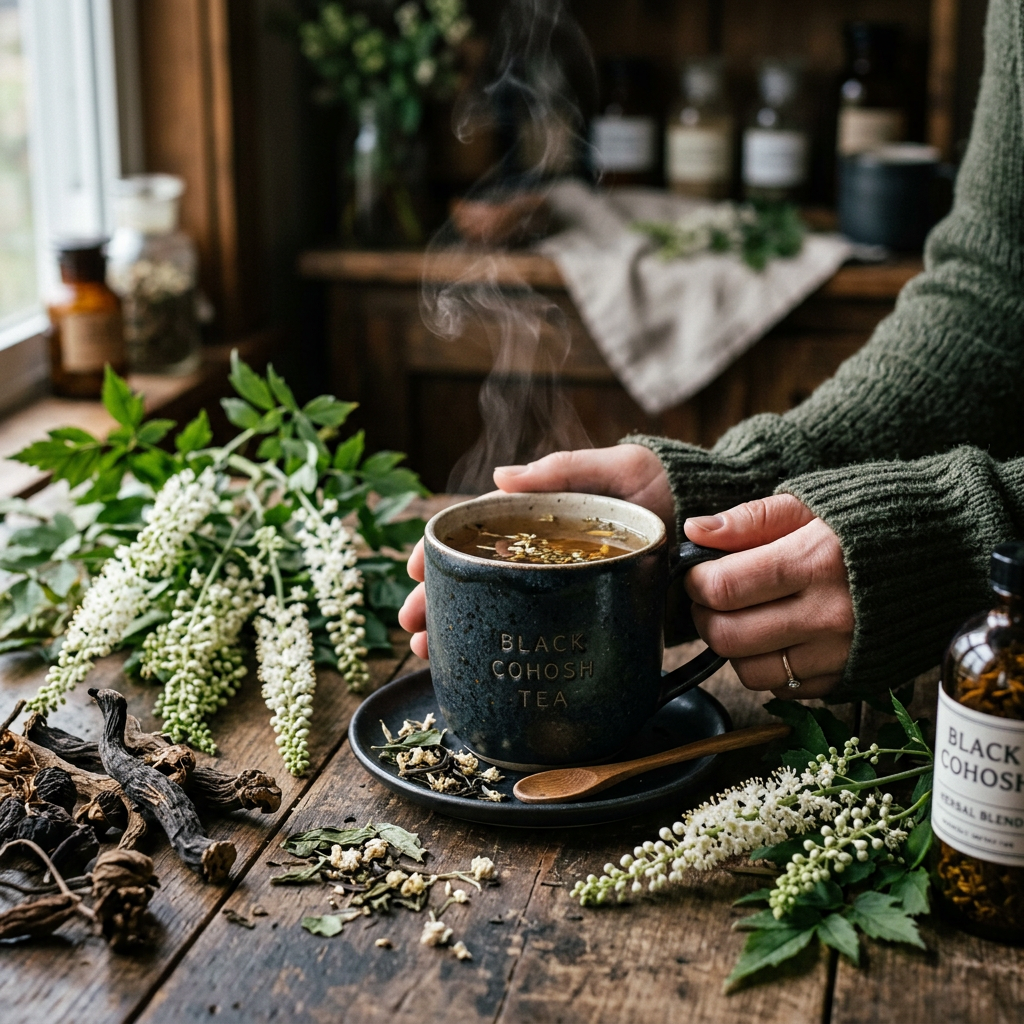
More: Tea for Menopause | Black Cohosh Tea
Frequently Asked Questions
What is red clover tea good for?
Menopause support, especially hot flashes, plus mood, bone health, and antioxidants, thanks to its isoflavones.
Does red clover tea help with menopause?
Yes. A meta-analysis found red clover reduced hot flash frequency, and a trial found its isoflavones reduced anxiety and depression in postmenopausal women.
Does red clover increase estrogen?
Red clover's isoflavones are plant compounds that gently echo estrogen's signal. They are much weaker than the body's own estrogen.
How long does red clover take to work?
Give it four to twelve weeks of daily use.
Who should not drink red clover tea?
Women who are pregnant or breastfeeding, have hormone-sensitive conditions, take hormone therapy, tamoxifen or blood thinners, or have a bleeding disorder.
How do you make red clover tea?
Steep 1 to 2 teaspoons of dried blossoms in just-boiled water, covered, for 10 to 15 minutes.
Your day. Your tea. Your Avodah Moment.
References
1. Ghazanfarpour M, Sadeghi R, Roudsari RL, et al. Red clover for treatment of hot flashes and menopausal symptoms: a systematic review and meta-analysis. J Obstet Gynaecol. 2016;36(3):301-311.
2. Lipovac M, Chedraui P, Gruenhut C, et al. The effect of red clover isoflavone supplementation over vasomotor and menopausal symptoms in postmenopausal women. Gynecol Endocrinol. 2012;28(3):203-207.
3. Lipovac M, Chedraui P, Gruenhut C, et al. Improvement of postmenopausal depressive and anxiety symptoms after treatment with isoflavones derived from red clover extracts. Maturitas. 2010;65(3):258-261.
4. Kolodziejczyk-Czepas J. Trifolium species: derived substances and extracts. Biological activity and prospects for medicinal applications. J Ethnopharmacol. 2012;143(1):14-23.


Leave a comment
This site is protected by hCaptcha and the hCaptcha Privacy Policy and Terms of Service apply.