Best Tea for Menopause and Perimenopause: Herbal Teas for Every Symptom
The best teas for menopause are red clover, black cohosh, and licorice for hot flashes and night sweats; chamomile and lavender for sleep, anxiety, and mood; ginkgo for brain fog; and eleuthero for fatigue. Each brings its own active compounds, and together they can support the whole experience of the change, not just one symptom.
The research is stronger than most women are told. A meta-analysis of clinical trials found black cohosh preparations reduced menopausal symptoms, including hot flashes, by 26%. [1] Red clover's isoflavones reduced the frequency of hot flashes in a separate meta-analysis. [2] In a randomized trial of postmenopausal women, both chamomile tea and lavender tea significantly reduced anxiety and depression. [3]
Why Menopause Symptoms Happen
As estrogen levels fall and fluctuate in perimenopause and menopause, the brain's temperature control and sleep and mood systems are affected. That is why hot flashes, night sweats, broken sleep, anxiety, and brain fog often arrive together. [4] Sleep problems are among the most common complaints of the menopause transition. [4]
The Best Teas for Menopause, Symptom by Symptom
|
Symptom |
Best herbs |
Why |
|
Hot flashes and night sweats |
Red clover, black cohosh, licorice |
Isoflavones and traditional cooling herbs with trial data [1] [2] [5] |
|
Broken sleep |
Chamomile, valerian |
Chamomile improved sleep in a 2024 meta analysis [6] |
|
Anxiety and low mood |
Lavender, chamomile |
Both reduced anxiety and depression in postmenopausal women [3] |
|
Brain fog |
Ginkgo |
Traditionally used for memory and focus |
|
Fatigue |
Eleuthero |
An adaptogen traditionally used for stress and fatigue [7] |
Red Clover: Plant Isoflavones
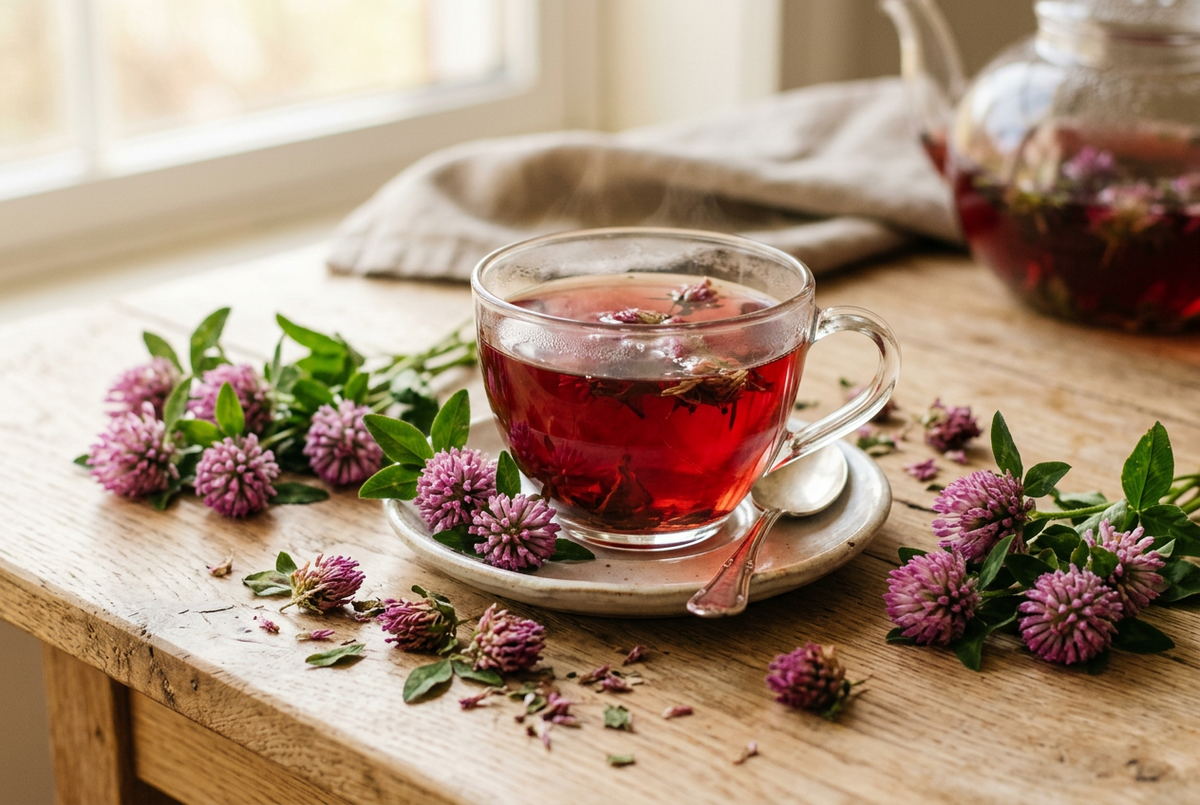
Red clover is rich in isoflavones, plant compounds that gently echo estrogen's signal as your own levels fall. A meta-analysis found red clover reduced the frequency of hot flashes. [2] More in Red Clover Tea.
Black Cohosh: The Classic Menopause Herb
Black cohosh is the most widely used herb for menopause in North America. A meta-analysis found black cohosh preparations reduced menopausal symptoms by 26%. [1] More on Black Cohosh Tea.
Licorice Root: For Hot Flashes
In a randomized trial, licorice root reduced the frequency and duration of hot flashes in menopausal women. [5] Licorice can raise blood pressure, so it is for moderate amounts only.
Chamomile and Lavender: Sleep and Mood
Chamomile's apigenin and lavender's linalool calm the nervous system. [3] [6] Both reduced anxiety and low mood in a trial of postmenopausal women. [3]
Ginkgo and Eleuthero: Focus and Energy
Ginkgo leaf has long been used for memory and mental clarity, and eleuthero is an adaptogen traditionally used to help the body cope with stress and fatigue. [7]
The Best Tea for Perimenopause
Perimenopause, the years before your final period, is often when symptoms are most unpredictable, because estrogen swings up and down rather than falling steadily. The same herbs help: red clover and black cohosh for the first hot flashes and night sweats, chamomile and lavender for broken sleep and mood swings. [1] [2] [3] Red clover tea for perimenopause is a popular starting point because its isoflavones gently echo estrogen as your own levels begin to fluctuate. [2] Not sure whether you are in perimenopause? See Signs of Perimenopause: 15 Early Symptoms.
Other Menopause Herbs You May Hear About
Sage, dong quai, and green tea are also popular. Sage is a traditional remedy for sweating, dong quai is a classic in Chinese medicine, and green tea brings L-theanine for calm focus during brain-fog days. Our menopause blend focuses on the herbs with the strongest clinical trials for hot flashes and mood: red clover, black cohosh and licorice, supported by chamomile and lavender in the Second Bloom bundle.
Ruby Radiance: Our Menopause Tea
Ruby Radiance brings red clover, black cohosh, licorice root, ginkgo, eleuthero, and cinnamon bark together in one caffeine-free cup, naturally sweetened with stevia. Warm and lightly spiced, morning or night.
The complete set: the Second Bloom bundle pairs Ruby Radiance with Sleep Restore for sleep and Quiet Mind for calm.
Your Menopause Tea Routine
|
Time |
Tea |
|
Morning or afternoon |
Ruby Radiance |
|
Stressful afternoon |
Quiet Mind |
|
Bedtime |
Sleep Restore |
Cut back on triggers: caffeine, alcohol, and very hot drinks can set off hot flashes in some women. Let your tea cool to a comfortable temperature, and keep caffeinated tea to the morning.
Menopause Tea Side Effects: Who Should Check First
Ruby Radiance contains red clover phytoestrogens, black cohosh, and licorice. Speak with your doctor first if you have a hormone-sensitive condition (including a history of breast cancer), liver disease, high blood pressure, take hormone therapy, blood thinners or other regular medication, or are pregnant or breastfeeding.
The Avodah Moment: Not Something to White-Knuckle Through
Avodah means devotion and service. Women in midlife are often carrying the most: teenagers, aging parents, careers at their peak. Then the night sweats arrive, and the old advice is simply to get through it.
You deserve better than getting through it. Make your cup a daily act of care. Brew it slowly, let it cool to just warm, and sit with it for five quiet minutes. This season asks a lot of you. Let something give back.
You cannot pour from an empty cup. This is where you fill yours.
Shop Ruby Radiance | Shop the Second Bloom Bundle
More: Best Tea for Hot Flashes and Night Sweats | Self-Care Gifts for Women
Frequently Asked Questions
What is the best tea for menopause?
Red clover, black cohosh, and licorice for hot flashes; chamomile and lavender for sleep and mood; ginkgo for focus. Ruby Radiance combines red clover, black cohosh, licorice, ginkgo, and eleuthero.
Does tea help menopause symptoms?
Its key herbs have research: black cohosh preparations reduced symptoms by 26% in a meta-analysis, red clover reduced hot flash frequency, and chamomile and lavender teas reduced anxiety in postmenopausal women.
What is the best tea for perimenopause?
The same herbs: red clover and black cohosh for hot flashes, chamomile and valerian for sleep, lavender for anxiety.
Can I drink menopause tea every day?
Yes, for most women, 1 to 2 cups a day. Check with your doctor if you have a hormone-sensitive condition, liver disease, or high blood pressure.
Is Ruby Radiance caffeine-free?
Yes, completely.
What drinks make hot flashes worse?
Caffeine, alcohol, and very hot drinks can trigger hot flashes in some women.
Your day. Your tea. Your Avodah Moment.
References
1. Shams T, Setia MS, Hemmings R, McCusker J, Sewitch M, Ciampi A. Efficacy of black cohosh-containing preparations on menopausal symptoms: a meta-analysis. Altern Ther Health Med. 2010;16(1):36-44.
2. Ghazanfarpour M, Sadeghi R, Roudsari RL, et al. Red clover for treatment of hot flashes and menopausal symptoms: a systematic review and meta-analysis. J Obstet Gynaecol. 2016;36(3):301-311.
3. Comparison of the effectiveness of lavender and chamomile herbal tea on anxiety and depression in postmenopausal women: a randomized controlled trial. Women's Health Bulletin. 2022;9(3):172-180.
4. Baker FC, Lampio L, Saaresranta T, Polo-Kantola P. Sleep and sleep disorders in the menopausal transition. Sleep Med Clin. 2018;13(3):443-456.
5. Nahidi F, Zare E, Mojab F, Alavi-Majd H. Effects of licorice on relief and recurrence of menopausal hot flashes. Iran J Pharm Res. 2012;11(2):541-548.
6. Kazemi A, Shojaei-Zarghani S, Eskandarzadeh P, Hashempur MH. Effects of chamomile (Matricaria chamomilla L.) on sleep: a systematic review and meta-analysis of clinical trials. Complement Ther Med. 2024;84:103071.
7. Panossian A, Wikman G. Effects of adaptogens on the central nervous system and the molecular mechanisms associated with their stress-protective activity. Pharmaceuticals (Basel). 2010;3(1):188-224.


Leave a comment
This site is protected by hCaptcha and the hCaptcha Privacy Policy and Terms of Service apply.