
Calming Tea Blends: What Works, and How to Choose
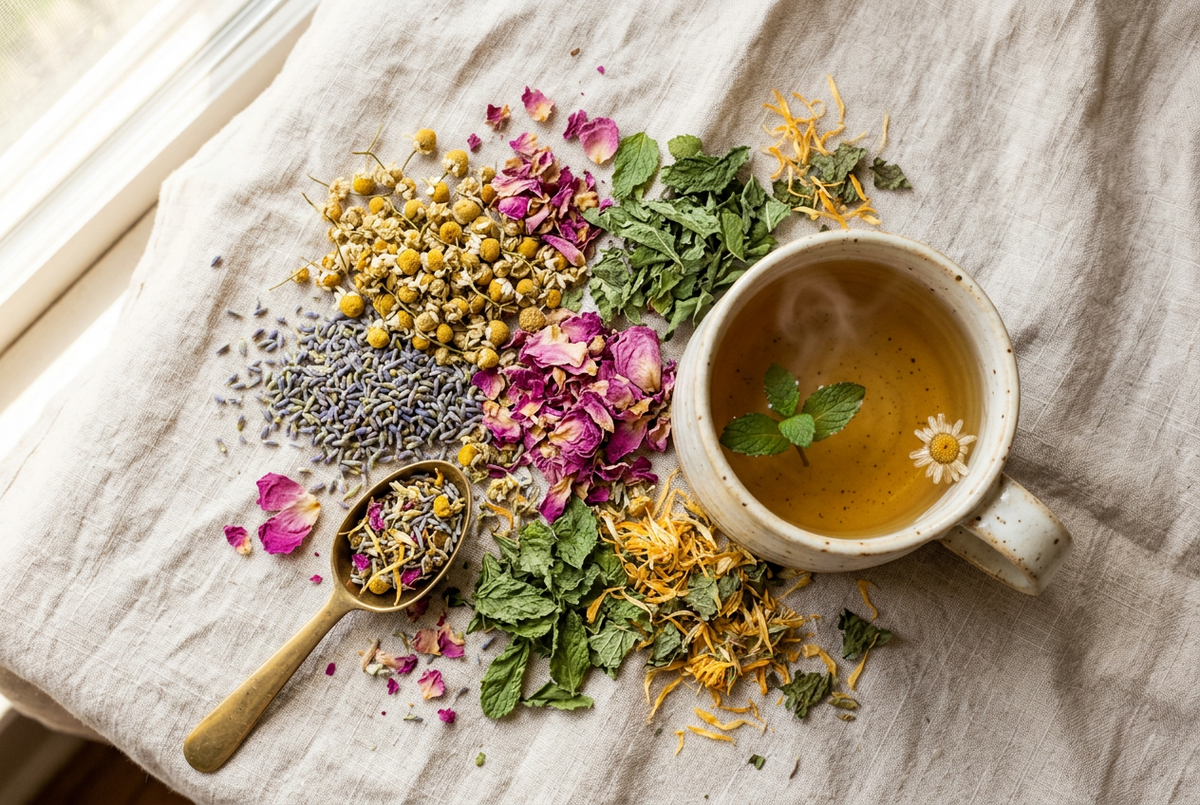
The best calming tea blends combine three things: a smooth, caffeine-free base like rooibos, at least one proven calming herb like lavender, and supporting botanicals that add flavour, antioxidants and comfort.* Blends work better than single herbs because each ingredient does a different job, and because a cup you love is a cup you will actually drink every day.
Here is what to look for in a calming blend, and a side-by-side guide to our two calming teas, Quiet Mind and Serene Tranquility, so you can choose the right cup for your moment.
What Makes a Calming Tea Blend Work
1. A Caffeine-Free Base
Caffeine stimulates the stress response a calming tea is meant to soothe. It raises cortisol, [1] and it can worsen anxious feelings. [2] Rooibos makes the ideal base: naturally caffeine-free, smooth and naturally sweet, and in laboratory research its compounds aspalathin and nothofagin reduced cortisol production.* [3] [4]
2. A Proven Calming Herb
Look for herbs with clinical research behind them. Lavender reduced anxiety in a randomized trial of lavender tea, [5] and its linalool calms the nervous system.* [6] Chamomile is another star, as are lemon balm and passionflower.
3. Supporting Botanicals
Fruits, flowers and spices make the blend delicious and add their own benefits. Rosehip brings vitamin C, berries bring anthocyanin antioxidants, rose lifts the mood, and warm spices comfort.*
4. A Flavor You Crave
The best calming tea is the one you drink consistently. Most clinical benefits in calming herb trials built over two to four weeks of daily use.* If a blend tastes medicinal, it stays in the cupboard.
Quiet Mind vs Serene Tranquility at a Glance
|
|
Quiet Mind Tea |
Serene Tranquility Tea |
|
Best for |
A racing, overthinking mind |
Winding down at the end of the day |
|
Hero herb |
Lavender |
Rooibos with warming spices |
|
Full ingredients |
Lavender, rooibos, rosehip, elderberry, blueberry, rose, stevia leaf |
Rooibos, nettle, rosehip, raspberry, licorice root, anise, cardamom, clove, calendula, stevia leaf |
|
Flavour |
Floral and berry, lightly sweet |
Warm, spiced and naturally sweet |
|
Feels like |
A deep breath for your thoughts |
A soft blanket on a cool evening |
|
Caffeine |
None |
None |
|
Best time |
Afternoon or evening |
Evening |
|
Pregnancy |
Licorice-free; ask your provider |
Contains licorice: avoid in pregnancy |
|
Loved by |
Recovering overthinkers |
Evening unwinders |
Quiet Mind Tea: For the Racing Mind
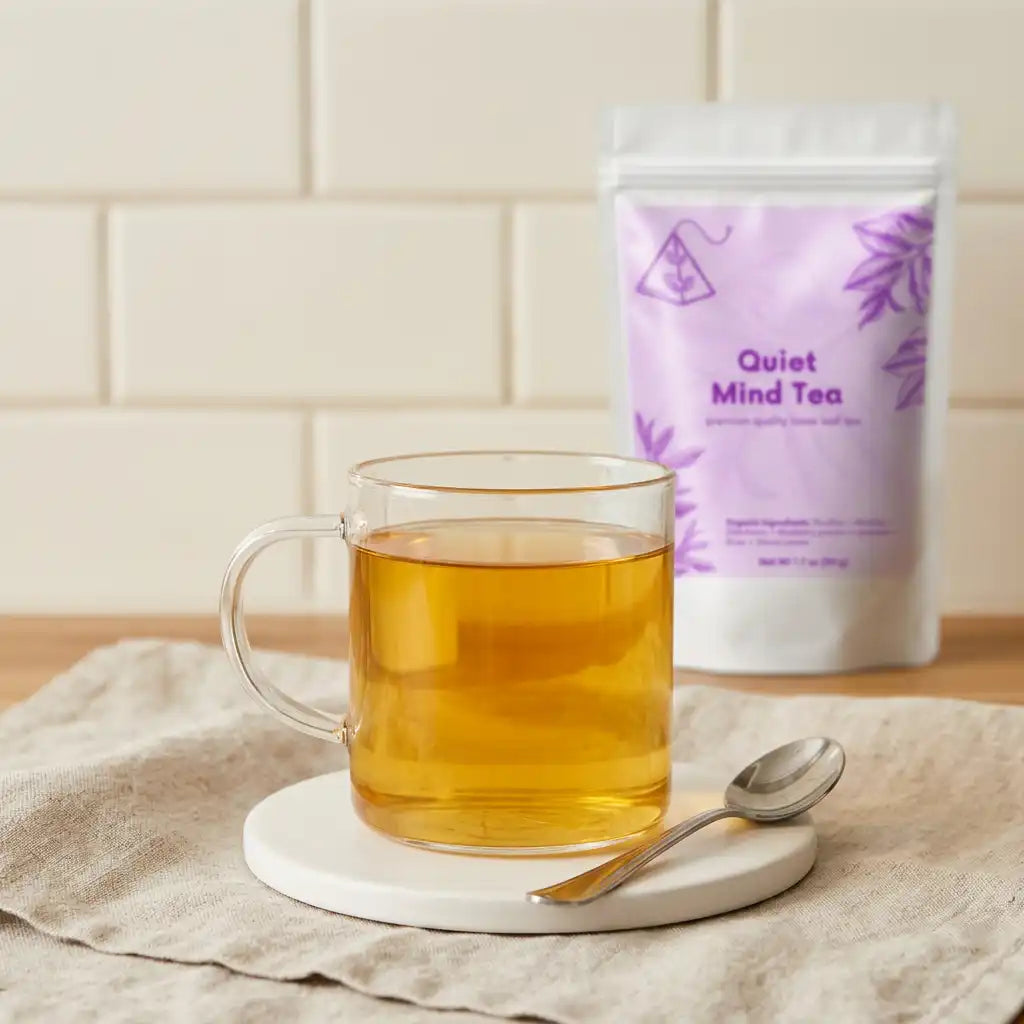
Quiet Mind is built around lavender, the herb for anxious, overactive thoughts.
- Lavender: linalool and linalyl acetate calm the nervous system.* [6] In a randomized trial, lavender tea twice daily reduced anxiety and depression.* [5]
- Rooibos: a caffeine-free base whose compounds supported healthy cortisol balance in lab research.* [3]
- Rose: a review of clinical studies found rose has calming, mood-supporting effects.* [7]
- Rosehip: rich in vitamin C. In a randomized trial, vitamin C reduced blood pressure and subjective stress responses to a stressful task.* [8]
- Elderberry and blueberry: anthocyanin-rich berries. In a randomized study, a wild blueberry drink improved positive mood.* [9]
Choose Quiet Mind when: your thoughts will not slow down, you feel anxious in the afternoon, or you need calm without drowsiness at work. Read Quiet Mind Tea: Your Questions Answered.
Serene Tranquility Tea: For the Evening Unwind
Serene Tranquility is a warm, spiced rooibos blend made for slowing down at the end of the day.
- Rooibos: a smooth, caffeine-free base with unique antioxidants.* [3] [4]
- Nettle: a nourishing leaf naturally rich in minerals, including magnesium and calcium.* [10] Magnesium plays a central role in the body's stress response.* [11]
- Rosehip: vitamin C for a body under stress.* [8]
- Raspberry: bright fruit and antioxidant polyphenols.*
- Licorice root: natural sweetness and a soothing, rounded body; the "harmonizer" that ties the blend together.* [12]
- Anise, cardamom and clove: warming spices traditionally used to settle digestion after dinner.*
- Calendula: golden petals rich in flavonoids and soothing triterpenoids.* [13]
Choose Serene Tranquility when: you want a cozy, dessert-like evening cup, your stress sits in your stomach after a long day, or you miss a sweet treat after dinner. Not suitable in pregnancy or with high blood pressure because of licorice. See Licorice Root Tea: Benefits and Safety. Read Serene Tranquility Tea: Your Questions Answered.
Can't Decide? Keep Both
Stress does not look the same every day, so your tea does not have to either. Some afternoons, your mind is racing before a big presentation: that is a Quiet Mind afternoon. Some evenings you just want something warm and sweet on the sofa: that is a Serene evening. And some nights stress follows you to bed: that is when Sleep Restore Tea, with chamomile and valerian, takes over.
The Evening Unwind bundle gives you all three: Quiet Mind, Serene Tranquility, and Sleep Restore. Keep them on the shelf, and whatever the evening brings, you have the right cup.
How to Make Your Own Calming Tea Blend
Want to experiment at home? Use this simple formula:
- 50% base: rooibos or honeybush
- 25% calming herb: lavender, chamomile, or lemon balm (go lighter with lavender)
- 15% fruit or flower: rosehip, rose petals, dried berries, or hibiscus
- 10% spice or sweet: cinnamon, cardamom, a pinch of licorice root (skip in pregnancy), or stevia leaf
Mix well, store in an airtight jar away from light, and brew 1 teaspoon per cup in just-boiled water, covered, for 5 to 7 minutes. For lavender guidance, see How to Make Lavender Tea.
The Avodah Moment: Choose Your Cup
Avodah means devotion and service. All day, you choose for everyone else: what they need, what comes first, who gets your time. This choice is just for you.
Stand at the shelf and ask yourself one question: what do I need right now? A quieter mind? Quiet Mind. Warmth and comfort? Serene. Rest? Sleep Restore. Brew it, cover it, breathe while it steeps, and give yourself the next five minutes.
You cannot pour from an empty cup. This is where you fill yours.
Shop Quiet Mind Tea | Shop Serene Tranquility Tea | Shop the Evening Unwind Bundle
Frequently Asked Questions
What is the best calming tea blend?
A caffeine-free blend that pairs a proven calming herb like lavender with a smooth base like rooibos. Quiet Mind Tea is built for a racing mind; Serene Tranquility for winding down in the evening.*
What is the difference between Quiet Mind and Serene Tranquility?
Quiet Mind is lavender-led, floral and berry, best for anxious, racing thoughts. Serene Tranquility is a warm, spiced rooibos blend with licorice, best for evening comfort. Both are caffeine-free.
Which calming tea is safe during pregnancy?
Avoid Serene Tranquility in pregnancy because it contains licorice root. Quiet Mind is licorice-free; ask your doctor or midwife whether it is right for you.
Are calming tea blends caffeine-free?
Ours are. Quiet Mind and Serene Tranquility are both 100% caffeine-free. Always check other brands' labels for green or black tea.
Can I drink calming tea every day?
Yes. Most clinical benefits of calming herbs built over two to four weeks of daily use.*
Which calming tea helps with sleep?
Sleep Restore Tea, with chamomile and valerian root, is our dedicated sleep blend.* Quiet Mind is lovely in the evening for a busy mind.
References
1. Lovallo WR, Whitsett TL, al'Absi M, Sung BH, Vincent AS, Wilson MF. Caffeine stimulation of cortisol secretion across the waking hours in relation to caffeine intake levels. Psychosom Med. 2005;67(5):734-739.
2. Klevebrant L, Frick A. Effects of caffeine on anxiety and panic attacks in patients with panic disorder: a systematic review and meta-analysis. Gen Hosp Psychiatry. 2022;74:22-31.
3. Schloms L, Storbeck KH, Swart P, Gelderblom WC, Swart AC. The influence of Aspalathus linearis (Rooibos) and dihydrochalcones on adrenal steroidogenesis: quantification of steroid intermediates and end products in H295R cells. J Steroid Biochem Mol Biol. 2012;128(3-5):128-138.
4. Joubert E, de Beer D. Rooibos (Aspalathus linearis) beyond the farm gate: from herbal tea to potential phytopharmaceutical. S Afr J Bot. 2011;77(4):869-886.
5. Bazrafshan MR, Jokar M, Shokrpour N, Delam H. The effect of lavender herbal tea on the anxiety and depression of the elderly: a randomized clinical trial. Complement Ther Med. 2020;50:102393.
6. Koulivand PH, Khaleghi Ghadiri M, Gorji A. Lavender and the nervous system. Evid Based Complement Alternat Med. 2013;2013:681304.
7. Mohebitabar S, Shirazi M, Bioos S, Rahimi R, Malekshahi F, Nejatbakhsh F. Therapeutic efficacy of rose oil: a comprehensive review of clinical evidence. Avicenna J Phytomed. 2017;7(3):206-213.
8. Brody S, Preut R, Schommer K, Schürmeyer TH. A randomized controlled trial of high dose ascorbic acid for reduction of blood pressure, cortisol, and subjective responses to psychological stress. Psychopharmacology (Berl). 2002;159(3):319-324.
9. Khalid S, Barfoot KL, May G, Lamport DJ, Reynolds SA, Williams CM. Effects of acute blueberry flavonoids on mood in children and young adults. Nutrients. 2017;9(2):158.
10. Bhusal KK, Magar SK, Thapa R, et al. Nutritional and pharmacological importance of stinging nettle (Urtica dioica L.): a review. Heliyon. 2022;8(6):e09717.
11. Boyle NB, Lawton C, Dye L. The effects of magnesium supplementation on subjective anxiety and stress: a systematic review. Nutrients. 2017;9(5):429.
12. Pastorino G, Cornara L, Soares S, Rodrigues F, Oliveira MBPP. Liquorice (Glycyrrhiza glabra): a phytochemical and pharmacological review. Phytother Res. 2018;32(12):2323-2339.
13. Arora D, Rani A, Sharma A. A review on phytochemistry and ethnopharmacological aspects of genus Calendula. Pharmacogn Rev. 2013;7(14):179-187.


Leave a comment
This site is protected by hCaptcha and the hCaptcha Privacy Policy and Terms of Service apply.